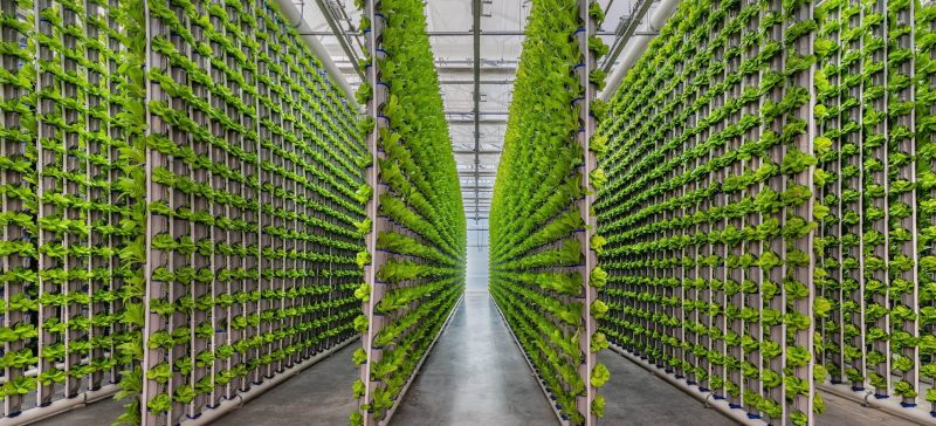
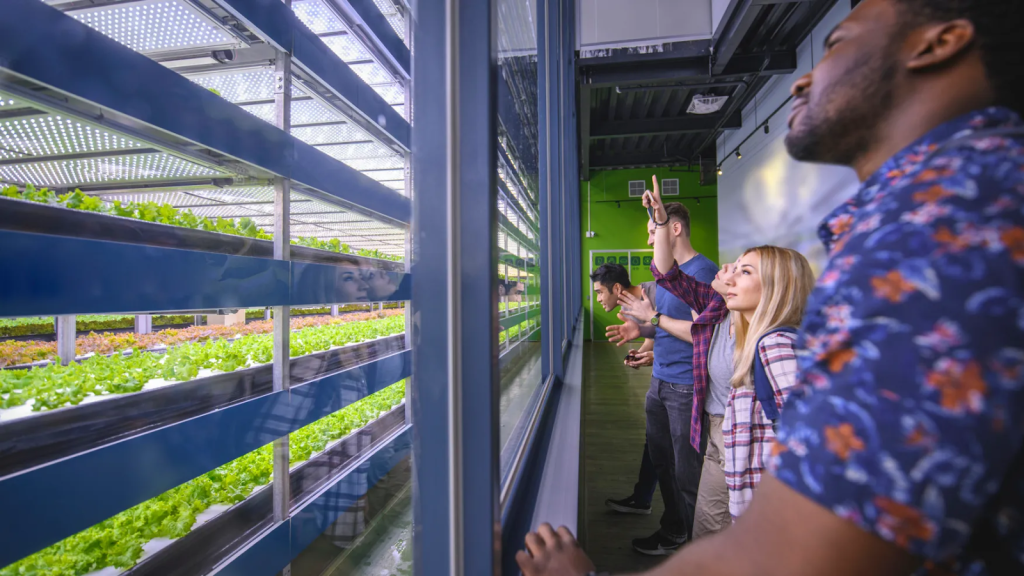
Figure 1: Vertical Farming Facility
Audio Blog Overview:
Introduction:
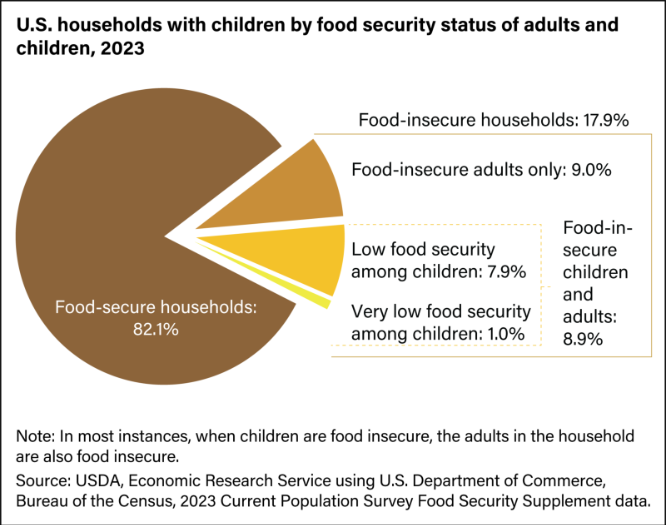
In 2050, the world population will be around 10 billion, which is 1.8 billion higher than today. Currently, the world struggles to face the issues of overpopulation, which, as a result, has led to food insecurity, homelessness, and rising climate problems. Furthermore, Figure 2, a 2023 pie chart provides more detail on the idea, stating that roughly 9% of families with kids struggle with food insecurity. In fact, when 47 million Americans struggle with food insecurity and they “don’t have the access to an adequate supply of nutrients,” it’s clear that if we don’t change our way of thinking about agriculture, this number will only increase (2). Traditional agricultural methods will soon no longer be a viable way to feed the world’s population. Instead, they will increase CO2 emissions, harm the environment through pesticides, and wear down our nutrient-rich soil (18). These problems put the future of our world in need of change, change for the better through vertical farming.
What is vertical Farming?
Vertical farming is an agricultural method in which plants are grown vertically, as seen in Figure 1, in an enclosed environment, supplied with nutrients and other inputs to support growth, using various growing structures and growing media. Although many people will downplay the impact vertical farming can have on the community, they often forget its ability to grow food year-round despite seasonal variations, with no need for pesticides, and its use of advanced growing techniques can supply communities with more food. Even better, vertical farming involves growing food in rows stacked on top of each other, exploring the region of plant growth in a vertical space rather than a horizontal one. As the population grows, there is a need for more space to accommodate new residents, and to do so, more land for habitation is required. According to the United Nations, “68% of the world population is projected to live in urban areas by 2050,” a 13% increase from the 2018 number of urban population (11). With this rise, it’s safe to assume that homelessness and food insecurity will increase, based on prior statistics. Moving to vertical farming practices could make cities more readily available to combat food shortages by promoting the vertical growth of food, but CO2 emissions would remain an issue. Although true, vertical farming has been evolving, becoming more futuristic with the application of robots, drones, and AI; at the same time, new sustainable technologies have been developed to limit CO2 emissions and energy costs.
Vertical Farmings different techniques
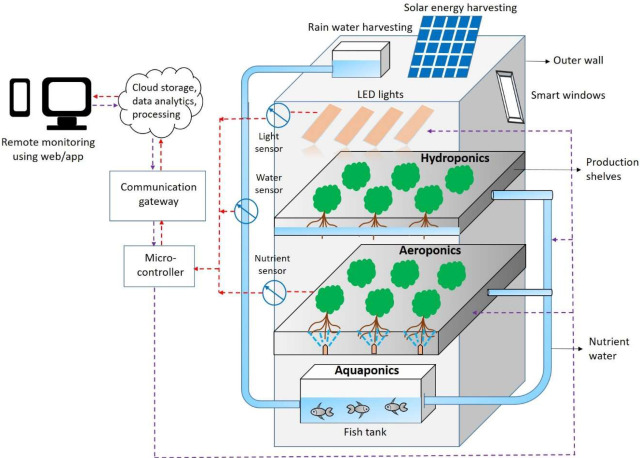
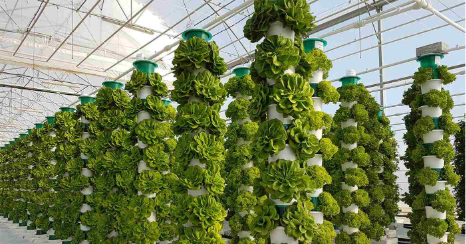
The vertical farming system is not a one-size-fits-all solution; depending on the region, different techniques may be optimal. This only further suggests the depth of vertical farming, whether it’s aquaponics, aeroponics, or hydroponics; the combinations that make up vertical farms seem endless. These three main vertical farming techniques are shown in Figure 3, each with different costs, different base materials, and potential benefits and downsides, suggesting the versatility of vertical farming. One primary concern about vertical farming has been that the plants aren’t as nutrient-rich as those grown in the soil with natural sunlight. Despite this belief, hydroponics, “the predominant growing method used in IVF,” and “in this method,” the “plants’ roots grow in a nutrient-rich solution”(3). This indicates that, despite modern conceptions, vertical farming can be and is more nutrient-rich than those grown in modern agriculture. In fact, hydroponics, as shown in Figure 4, can provide nutrient-rich water through non-soil growth media, enabling greater nutrient absorption and reducing soil-borne disease (6). On the other hand, aeroponics relies on a spraying system that allows more oxygen to reach plants and more accurate growing techniques. This brings another problem with another common vertical farming technique, aquaponics, as seen in Figure 3. In aquaponics, water is cycled through tanks with fish, which can add nutrients to the water through fish feces, but some acids may be too strong for the plants. This adds the cost of adding a base to the water supply to prevent harm to the plants. Furthermore, vertical farms minimize herbicide and pesticide use due to their controlled environments; despite this, there have been common problems of disease outbreaks within the buildings (19). Through further research, it will be easier to identify optimal conditions for these plants, isolate them for disease control, and increase growth factors.
Vertical Farming Utilization of Vertical Space
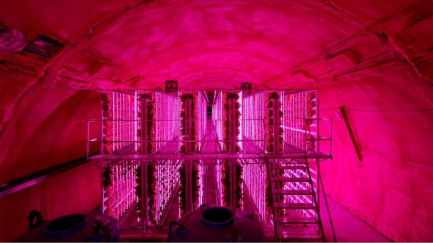
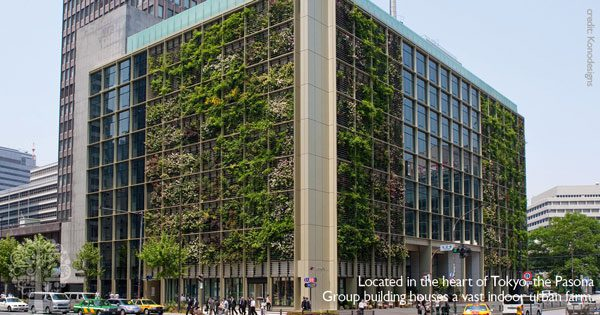
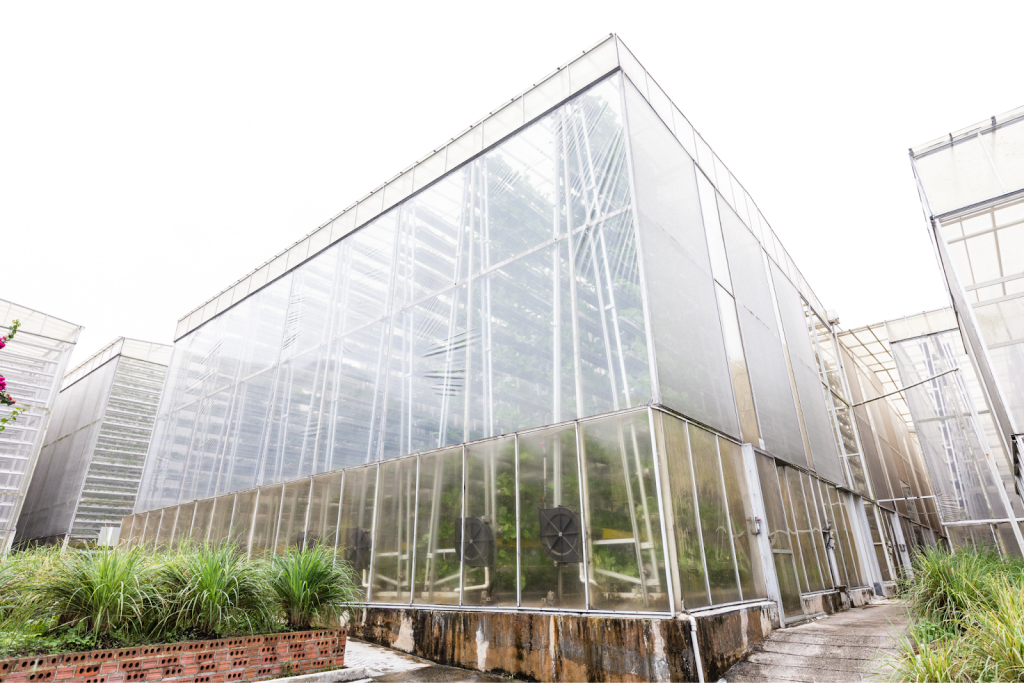
Although many will say that these vertical farms will take up too much space, in Britain and South Korea, they have repurposed old “abandoned tunnels used during World War II,” suggesting the potential of repurposing existing infrastructure (3). Figure 5 shows an example of a tunnel in South Korea that was repurposed to be a vertical farm, demonstrating how vertical farming can be adaptable to locations with minimal or no other use. In fact, next time you go to the city, look around and be on the lookout for abandoned buildings or factories, and just imagine a life where those factories are turned into vertical farms providing the very nutrients your city needs. In fact, Figure 6 shows just this idea: a vertical farm created in Japan, refurbishing a 50 year old building to create crop space that totals “over 43,000 square feet with 200 species grown including fruits, vegetables, and rice” (15). There are numerous ways vertical farms can be set up to best fit each environment, underscoring the concept’s versatility, urban application, and potential for future generations.
Personal Story of vertical farming

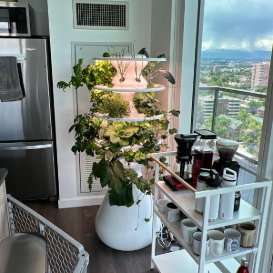
Growing up in school, we always had the opportunity to do weekly research slides on future innovations in our society, where we would explain them using our knowledge from videos and articles. This was around the time my family had just planted an outdoor garden with various vegetables and fruits, and we had gotten an indoor grow lamp a year before. So I thought I’d do some research on indoor farms, greenhouses, and vertical farms, and my findings concluded that although the concept is relatively small, its potential is high. During this time, the seasons changed from summer to fall to winter, and as the plants outside began to die from hostile weed invasions and the cold temperatures, the plants inside flourished. They grew from little squares to full-grown vegetables, using a grow bed and a hanging LED light, protected from the outside environment, further suggesting the implications of vertical farming in extreme environments that might limit modern agriculture. Again, throughout high school, I noticed the concept of vertical farming kept coming up. With this increased prevalence, it was apparent to me that vertical farming would continue to grow year on year. Throughout my life, I have seen vertical farming grow from a small concept into a potential contender against modern agriculture. Vertical farming has reached major milestones over the years, including its emergence as a contender to take over the agricultural world. Specifically, Figure 7 suggests that, based on current growth rates, the vertical farming market will reach roughly 90 billion dollars by 2034. More importantly, my story illustrates the benefits of small-scale farming through vertical farming. Vertical farming doesn’t have to be a big operation; it can start with people planting at home, using inexpensive materials like manure, small LED lights, and a storage device. Or even in an urban setting, as Figure 8 suggests, where people might not even have a chance to plant outside. It opens the door to individual farming, allowing you to grow produce right in the comfort of your own home, and could even yield benefits for small communities if they had a group vertical farm.
Profitability and Bankruptcies
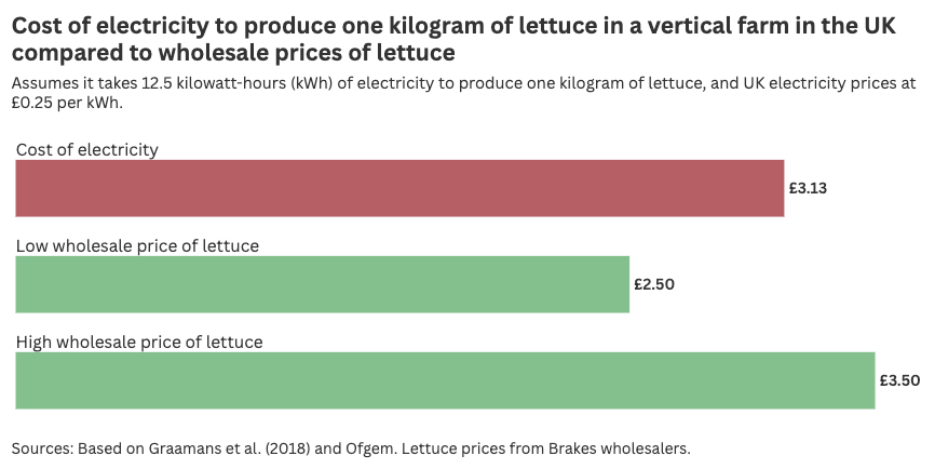
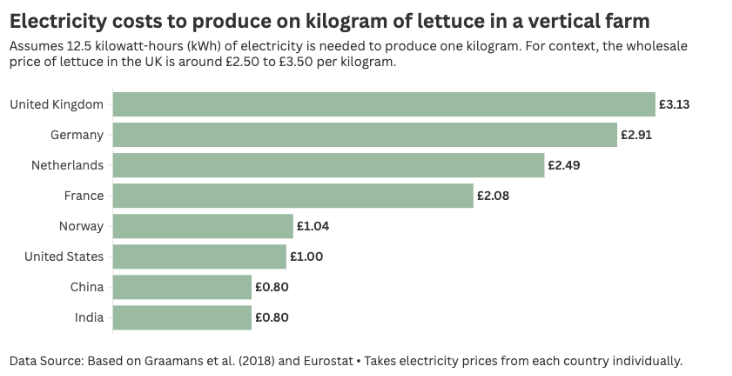
Figure 9 and 10: Cost Associated with Vertical Farming (Graamans et al., 2018)
Vertical farming’s immense growth hasn’t been without its struggles. Nicholas Varas, a Mechatronics graduate research student at Ontario University, explains this idea by suggesting that vertical farming not only provides profit in niche markets but that current costs outweigh the potential benefits (19). To put it bluntly, vertical farming currently costs a fortune. In place of natural weather, you have HVAC systems for heating and cooling, and instead of sunlight, you have LED lights. Beyond this scope, you need humans, experts and robots to help run the technology and actually harvest the food. There is a reason for all this madness: vertical farming can limit pesticide use, improve water sustainability, and even optimize plant growth. Yet, as with every new concept, there are pitfalls: improper design and poor management. The fact is that mistakes are needed before there can be an optimal solution. Even though numerous U.S. vertical farming companies have filed for bankruptcy, this allows other companies to learn from their mistakes and supports small, successful companies, even those in niche sectors (19). Farm one, for example, is a luxury salad greens, edible flower, and microgreens manufacturer that has been a seller out of New York from 2016 to present and provides to the finest restaurants in NYC. They navigate the niche market with confidence, offering operational visits, educational lectures, and training programs, suggesting their impact on the vertical farming industry is more than just profit (6). I believe that, to grow as a concept, vertical farming needs more people to fail and more research to understand the potential of growing vertically. Vertical farming is like an upcoming star player, immature but ambitious, expensive yet holds long-term value, a good option for the future if growth happens.
Projects Underway
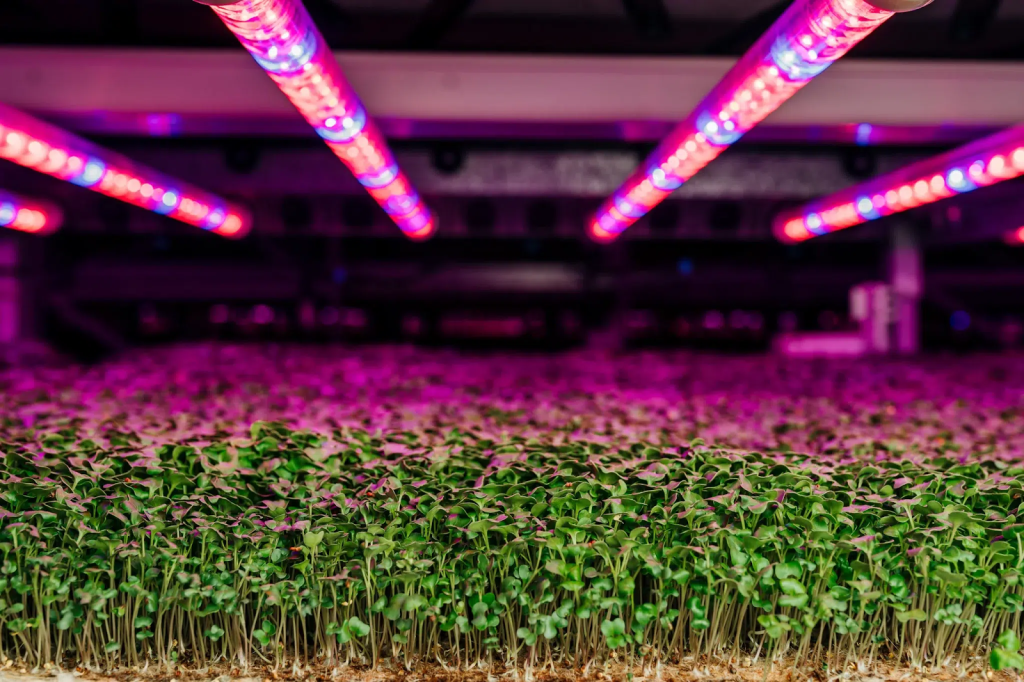
This growth has continued from 2012, with Sky Greens’ facility in Singapore, and with AeroFarms’ return from bankruptcy in 2023 (4). Vertical farming is growing in popularity, suggesting the health of the market, as companies compete to gain a competitive advantage to reach profits and stay alive. Aerofarms’ past bankruptcy in early 2023 was due to a lack of employee education, a misguided business agenda, and inefficient resource use (4). Despite its bankruptcy, the company’s comeback suggests the potential for others, as AeroFarms attracted more investors, changed CEOs, closed facilities, and more to regain a foot in the door. Their most important change was switching to selling microgreens, which are more nutritious than fully grown versions, take only 5.5 days to grow, as shown in Figure 11, and allow more plants to be produced with fewer resources (4). This is only one of the profitable forms underway that is known to make profits in the market. Sky Greens, the world’s previous pioneering low-carbon hydraulic-driven vertical farm that utilized rainwater harvesting techniques and natural sunlight to lower costs (6). One really interesting innovation used by Sky Green’s facilities, Figure 12, is that their plant systems are set up with hydraulic rotating devices, allowing each plant to receive even sunlight. Although Sky Green has begun closing facilities due to high maintenance costs, this suggests that vertical farming continues to struggle with high costs, providing a key point to tackle for the future. On the other hand, it is reported that “According to the 2020 global CEA census report, 43% of shipping container farms, 47% of indoor vertical farms” were profitable (3). With nearly 50% of vertical farms across the globe profitable, this suggests the potential for profitability if innovations reduce light, HVAC, and other costly farm controls. Along with these major projects currently underway, many universities have begun to seriously consider vertical farming and its futuristic implications.
Sustainable Food Creation by Vertical Farming
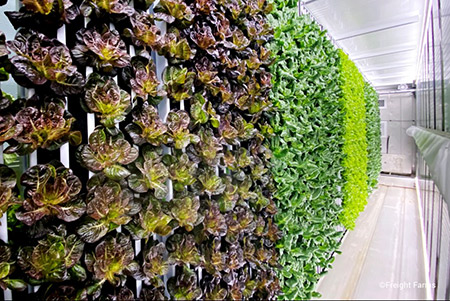
Despite these beliefs, vertical farming has the potential to change the world by supporting sustainable farming and increasing food production. Illinois State University is one of the numerous universities exploring this new, growing technique, suggesting there is a serious discussion for real change. The university has put 200,000 dollars into a vertical farming shipping container, loaded up with monitoring devices, allowing them to grow 4,600 plants, which is equivalent to 1-2acres in 6-8 weeks, suggesting the potential of these methods (12). Although these statistics highlight the immense amount of produce vertical farming can produce, they don’t paint the full picture; in fact, this number doesn’t reflect the fact that the most common vegetables belong to one food category, led by lettuce, basil, kale, and other foods of similar anatomy. As seen in Figure 13, various varieties of lettuce are grown in a system where their roots are exposed, allowing more oxygen to reach the plants and preventing the spread of manure-borne diseases. Some may even say that “indoor farms might be able to provide some garnish and salads to the world, but forget about them as a means of growing much other food” (7). In fact, this is merely a weak argument that looks only at the present of the concept to imply a future. But for every million-dollar business, the most common concept before success is failure over and over again. This concept is present in our world; just yesterday, I saw an article about the vacuum seller Dyson and how its owner created around 5000 different prototypes, failing over and over before finding the right product. The point of the story is to say that, currently, vertical farming is in this stage, that failure should be expressed, and that all the bankruptcies that may follow or wrong turns are concepts to learn from. Vertical farming will become sustainable in the future as we advance over the next decades, as more research is being done and will be done (22).
Energy and Water Comparisons to Open Agriculture
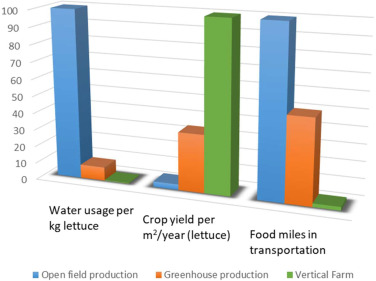
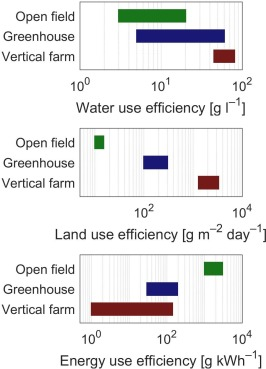
Another bump in the road is the costs of these vertically produced foods. At the moment, not many people are willing to pay more for the same food they can get for cheaply, and why would they? Figures 9 and 10 suggest that based on current electricity costs of different regions, vertically produced lettuce could be at the high end in order to make a profit. Though many will believe that these costs have no chance of going down, in reality, over time, as more research identifies optimal growing conditions, it could lead to lower resource use and lower costs. For example, the vertical farm shipping container at Illinois State University is said to use “95% less water or approximately 5 gallons of water per day” in growing about 1-2 acres of plants, in comparison to modern agriculture, which utilizes approximately “1 acre foot equivalent to 325,851 gallons” of water (9). Figure 14 puts these comparisons into perspective: vertical farms lead in production while producing the least amount of transportation emissions and water consumption. In fact, these comparisons suggest the major environmental improvements a vertical farming system could achieve (18). From further comparison, it can be concluded that vertical farming would be less efficient in terms of lighting, as it cannot grow in sunlight but rather under hundreds of LED lights. This has led to what Figure 15 shows, a major decrease in the efficiency of energy, “decreases on average by twenty times” compared to that of open agriculture (10). In fact, it was found that basil plants growing under LED lights had more efficient growth with a 14-hour light cycle and 10-minute light interruption intervals than with 16 hours of continuous light (5). Through these heightened abilities to control plant growth conditions, there is potential for a more sustainable and efficient growth of plants, suggesting more plant production over time than modern agriculture, as seen in figure 14 (17) Further research on the implications of LED light intervals could improve the cost ratios to modern agriculture, while increasing growth rates, maximizing the potential food production of these systems.
Problem of CO2 emissions, potential solutions
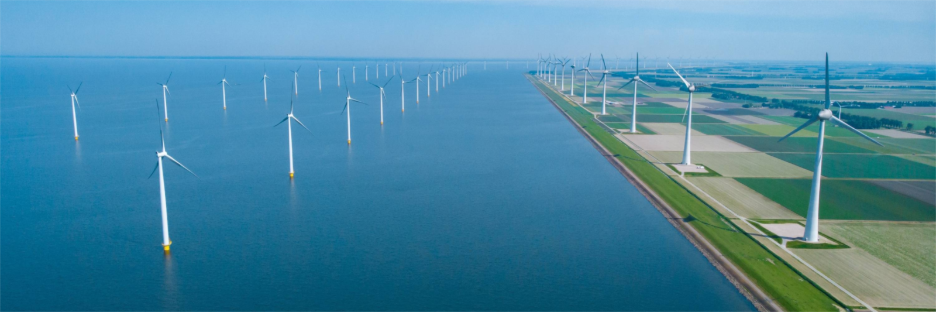
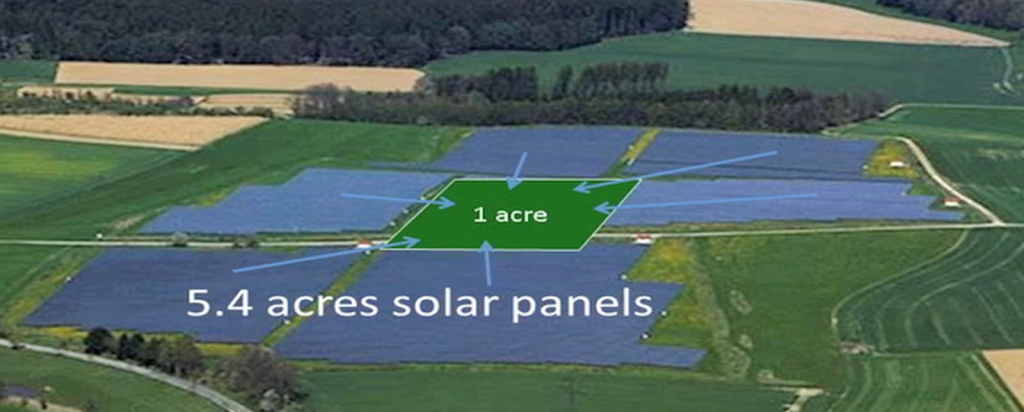
Vertical farms, like modern agriculture, require extensive new technology to operate; as a result, these technologies produce significant amounts of CO2 emissions, which harm our planet. In fact, a calculation comparing vertical farms and modern agriculture in Southern Europe found that the total transportation and production emissions for a modern farm were lower than the total emissions from producing a high-tech vertical farm (16). This is a complicated concept, though, as it entails that our world is currently not ready for vertical farming and that modern agriculture may be more sustainable. In fact, this is dependent on the rise of technology alongside vertical farming. But compared to places such as Iceland, where the weather may be too cold to grow food year-round, vertical farming could be a highly sustainable option, especially given that Iceland has a very high percentage of its nation powered by clean, renewable energy. Although a regional event, in which Iceland’s tectonic plates, pressure, and waterfalls play a role in advancing sustainability, it still suggests the potential for other countries to attempt to follow their lead of using Iceland’s environments to harness clean, renewable energy. While true, the United States can move to solar for many reasons beyond the business and money making side. One combative idea for this problem would be to turn current agricultural fields into sites for renewable energy sources, such as photovoltaic arrays or wind farms, as agricultural farms currently occupy 39% of all land in the United States (9). As a city, it would be possible to run these vertical farms on energy generated far away, effectively limiting CO2 emissions through clean, renewable energy. However, later we will learn that this is an unsustainable idea to maintain, further suggesting the limited potential of vertical farming in the current global context. Dr. BugBee, a past professor at Utah University, provides another ample reason that “we would need 5.4 acres of solar panels to provide one acre of sunlight equivalent,” suggesting that even though a facility might only take an acre if it’s small, it would require 5.4 acres of photovoltaic panels to produce just light (21). As shown in Figure 17, the tremendous amount of space taken up by solar would suggest an alternative to fossil fuels, but at the same time suggests unsustainability in the amount of area it takes up. Although true, solar panels are only one type of renewable energy. In addition to solar panels, there are wind power, water, and naturally powered sources such as steam or earth energy. Especially with the recent comeback of wind farms, as shown in Figure 16, it could be a viable alternative that is applicable to most locations. To break it down to just solar panels and say that by going to “vertical farming, if anything, we’re going to increase the coverage of land,” is not only a crude statement on the whole of vertical farming in connection with sustainable energy, but rather suggests a lack of innovation (21). I believe that as nations around the world continue to develop and focus on climate change, these sustainable and renewable energy sources will become more prevalent and part of the lifestyle that makes vertical farming not only the optimal choice but the only choice.
Impact on People
The main factor that comes to mind when speaking about vertical farming’s future potential is whether it aligns with the three P’s of sustainability: people, profit, and planet. Although “A critical review on efficient thermal environment controls in indoor vertical farming” suggests that the pillars are possible for the future. However, multiple factors might limit this profit’s potential, such as the economic hit resulting from shifting from horizontal to vertical farming. How would the farmers get their jobs, especially when they make up a significant part of the system our country runs on currently? How is there going to be a shift where major companies don’t go bankrupt as a result of the limited necessities for giant farming machines? In my opinion, these farms don’t necessarily have to go away, but in the future, as the nation shifts to feed the immense increase in population, more efficient farming techniques will be required. The World Resources Institute states that “we will need 56% more food” than in 2010, and that the “50% of vegetated land” currently used will no longer be enough to feed the people or our nation (14). Furthering the stress that there needs to be and will be changes in the future. These vertical farms will need experts and workers to ensure all farm systems are operating according to plan, suggesting the potential job opportunities vertical farming offers. In addition, Figure 18 shows a new vertical farming facility opening, where the foods made at the facility will be sold at “Walmart, Whole Foods Market, ShopRite, Amazon Fresh, FreshDirect, and Baldor Specialty Foods,” feeding the local community and boosting the local economy (1).
Impact on Planet
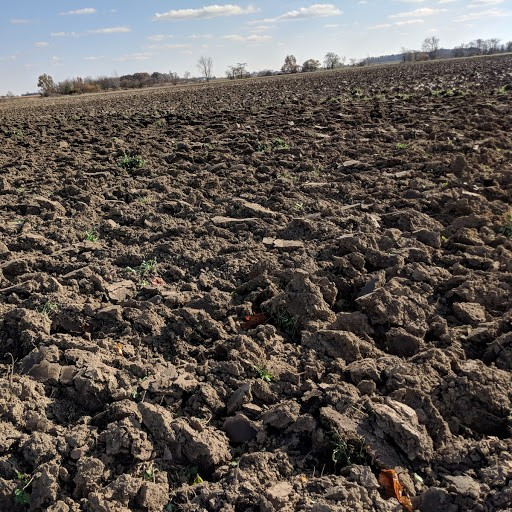
On the other hand, the benefits for the planet are immense, whether it’s reduced CO2 emissions from more sustainable energy sources or less stress on the environment. In fact, it might even be possible for natural plants and ecosystems to be rejuvenated as a result of less herbicide use and natural zones recovering. In addition, Figure 19 suggests that over-farming can lead to the topsoil eroding, causing the soil to lose the ability to hold water and vital nutrients it gives to crops (20). Given the immense amount of water these fields require, combined with the herbicides and pesticides used on them, it can be assumed that modern agriculture doesn’t protect our planet as much as we would hope. These pesticides have been recently found to leak into groundwater, contaminating it, and going far beyond their intended use of just the soil (13). It is a fact that homeowners and farmers use around “1 billion pounds of pesticides annually,” and when around 50% of the United States utilizes groundwater as its form of water, it’s a real problem (13). This not only harms the environment but also harms people. It makes you think about how you might be affected, especially if your life is like mine and my family’s, which relies on wells and groundwater for its main water supply. In vertical farming, the soil can get a break from the constant stress of producing crops year-round. Vertical farming accurately represents people, profit, and planet in some instances today, but as more advanced technology emerges, I know it will take these traits to the next level. At a level where everybody succeeds through proper nutrition, CO2 emissions to our planet are reduced through more sustainable practices, such as vertical farming, and the community becomes profitable through expanding business models.
Vertical Farming New Technologies For the Future
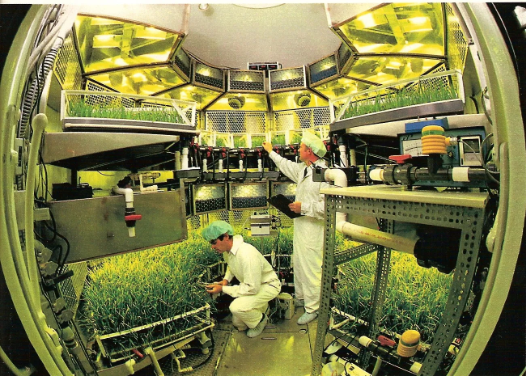
Vertical farming has many implications for the future. If we ever plan to go to other planets, we must have a suitable plan in place to ensure those on the rocket survive in the long-term. According to NASA, it is “advancing many technologies to send astronauts to Mars as early as the 2030’s,” suggesting the potential application of vertical farming (8). As shown in Figure 20, scientists at NASA continue to make vertical farming models that utilize space and give astronauts the nutrition they need. Vertical farming would be the most suitable option for the missions because, as we have learned, the nutrient-rich solutions, potential applications with solar power, and fast growth rates could provide the astronauts with their essential plant-based nutrients. There are still flaws with this plan, especially the limited variety of plants. On the other hand, new technologies such as drones are being used in vertical farming, with implications for collecting real-time data on plant growth, health, and status (18). In fact, Figure 21 suggests these implications may help reduce costs and prevent disease spread through constant analytics. These new technological concepts provide another form of sustainability for our future by advancing with the times and evolving our methods of food production.
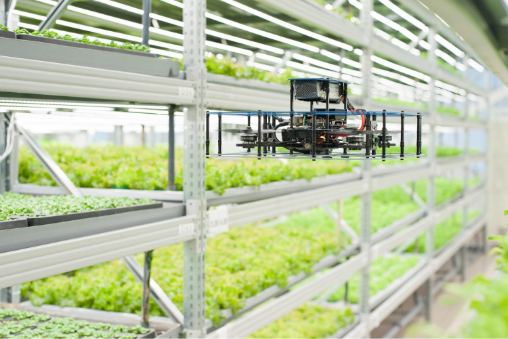
Figure 21: Drone Application in a Vertical Farm (Caterer, 2021)
How Vertical Farming Can Succeed
Vertical farming has immense potential if only the attributes of renewable energy, cost, food variability, and community can coexist with the concept’s acceptance in the future. I believe that, beyond anything I’ve stated earlier, the community is one of the most important factors in the possibility of vertical farming in the future. The community has to be willing to sacrifice some space, but could benefit from nutritious food and job opportunities, and could be seen as a community building spot. Some problems with this idea might be that the cost of vertical farms is too much for a community to handle, and that if a company doesn’t see it as profitable to own a vertical farm there, they won’t build one. In counter to this idea, if the government were to apply something similar to that of the Singaporean government which is “to enhance self-sufficiency and address the escalating climate difficulties, the government is strongly promoting innovative farming practices and is willing to make land available for renewable energy” (5). Suggesting that “the sector benefits from political support and incentives due to the scarcity of agricultural land,” opening the idea that the government could put incentives on vertical farming to move to a more sustainable future, similar to how they put incentives on electric vehicles (5). Potentially, prices could even go down as a result of these incentives, as transportation costs could be reduced and government incentives could cover large-scale costs that are usually passed on to consumers. In addition, local community members can reach out to representatives about incentives on vertical farming, buy locally produced vertically farmed goods, and potentially buy their own vertical farming equipment to better help vertical farms gain a foothold.
Vertical farming has many implications that could help save our future from increased food insecurity, while suggesting opportunities for improved nutrition, food production and space utilization. In its entirety, vertical farming is yet to become fully sustainable. Still, over time, new technologies, techniques, and energy sources will be developed, allowing vertical farming to better fulfill the requirements of our society.
Bibliography
- 150,000 square foot indoor vertical farm coming to the St. Louis region. (2021, August 13). FOX 2.https://fox2now.com/news/missouri/150000-square-foot-indoor-vertical-farm-coming-to-the-st-louis-region/
- About Hunger and Homelessness | Move for Hunger. (n.d.). Retrieved October 30, 2025, from https://moveforhunger.org/hunger-and-homelessness
- Ahamed, M. S., Sultan, M., Monfet, D., Rahman, M. S., Zhang, Y., Zahid, A., Bilal, M., Ahsan, T. M. A., & Achour, Y. (2023). A critical review on efficient thermal environment controls in indoor vertical farming. Journal of Cleaner Production, 425, 138923. https://doi.org/10.1016/j.jclepro.2023.138923
- BlueOceanTech, S. (2025, May 9). AeroFarms turned itself around after bankruptcy. Is it a sign that vertical farming can succeed? AeroFarms. https://www.aerofarms.com/aerofarms-turned-itself-around-after-bankruptcy-is-it-a-sign-that-vertical-farming-can-succeed/
- Dziumla, J., Guenther, E., Karthe, D., & Dijkstra-Silva, S. (2025). Sustainability assessment for novel approaches in the agri-food industry: The example of vertical farming. Journal of Cleaner Production, 495, 145036. https://doi.org/10.1016/j.jclepro.2025.145036
- Erekath, S., Seidlitz, H., Schreiner, M., & Dreyer, C. (2024). Food for future: Exploring cutting-edge technology and practices in vertical farm. Sustainable Cities and Society, 106, 105357. https://doi.org/10.1016/j.scs.2024.105357
- Foley, D. J. (2020, April 16). No, Vertical Farms Won’t Feed the World. Medium. https://globalecoguy.org/no-vertical-farms-wont-feed-the-world-5313e3e961c0
- Humans to Mars—NASA. (n.d.). Retrieved October 30, 2025, from https://www.nasa.gov/humans-in-space/humans-to-mars/
- Irrigation & Water Use | Economic Research Service. (n.d.). Retrieved October 30, 2025, from https://www.ers.usda.gov/topics/farm-practices-management/irrigation-water-use
- Miserocchi, L., & Franco, A. (2025). Benchmarking energy efficiency in vertical farming: Status and prospects. Thermal Science and Engineering Progress, 58, 103165. https://doi.org/10.1016/j.tsep.2024.103165
- Nations, U. (n.d.). 68% of the world population projected to live in urban areas by 2050, says UN. United Nations; United Nations. Retrieved October 30, 2025, from https://www.un.org/uk/desa/68-world-population-projected-live-urban-areas-2050-says-un
- New Vertical Farm at Illinois State University to serve as example of sustainable urban agriculture—News—Illinois State. (2025, May 1). https://news.illinoisstate.edu/2025/05/new-vertical-farm-at-illinois-state-university-to-serve-as-example-of-sustainable-urban-agriculture/
- Pesticides in Groundwater | U.S. Geological Survey. (2018, October 9). https://www.usgs.gov/water-science-school/science/pesticides-groundwater
- Ranganathan, J., Waite, R., Searchinger, T., & Hanson, C. (2018). How to Sustainably Feed 10 Billion People by 2050, in 21 Charts. https://www.wri.org/insights/how-sustainably-feed-10-billion-people-2050-21-charts
- Repurposing Empty Skyscrapers Into Urban Farms | Garden Culture Magazine. (2021, February 1). https://gardenculturemagazine.com/repurposing-empty-skyscrapers-into-urban-farms/
- September 2024, W. byCiaran W. updated10. (n.d.). Is Vertical Farming Bad for the Environment? GreenMatch.Co.Uk. Retrieved October 1, 2025, from https://www.greenmatch.co.uk/blog/is-vertical-farming-bad-for-the-environment
- SharathKumar, M., Heuvelink, E., & Marcelis, L. F. M. (2020). Vertical Farming: Moving from Genetic to Environmental Modification. Trends in Plant Science, 25(8), 724–727. https://doi.org/10.1016/j.tplants.2020.05.012
- Sowmya, C., Anand, M., Indu Rani, C., Amuthaselvi, G., & Janaki, P. (2024). Recent developments and inventive approaches in vertical farming. Frontiers in Sustainable Food Systems, 8. https://doi.org/10.3389/fsufs.2024.1400787
- TEDx Talks (Director). (2024, July 5). Disease outbreak led to decimated crops: Vertical farms are failing—What we can learn from their mistakes | Nicholas Varas | TEDxOshawa [Video recording]. https://www.youtube.com/watch?v=Oo7DpNPR-tM
- U.S.A. soil erosion. (2023, January 5). Ohio Ag Net | Ohio’s Country Journal. https://ocj.com/2023/01/usa-soil-erosion/
- Utah State University Extension (Director). (2015, September 18). Why Vertical Farming Won’t Save the Planet [Video recording]. https://www.youtube.com/watch?v=ISAKc9gpGjw
- Vertical Farming – No Longer A Futuristic Concept: USDA ARS. (n.d.). Retrieved September 30, 2025, from https://www.ars.usda.gov/oc/utm/vertical-farming-no-longer-a-futuristic-concept/