Introduction
What is vitamin D? Vitamin D is a nutrient the body needs, along with calcium, to build bones and keep them healthy. The body can absorb calcium only if it has enough vitamin D. Calcium is a major part of bones. Vitamin D also has many other uses in the body. It supports immune health and helps keep muscles and brain cells working. In many cases it has been shown that there is a low amount of vitamin D among the population but especially in athletes. In Figure 1, the diagram by Gatorade Sports Science Institute identifies the base level amount of vitamin D in a numerous number of athletes from different sports.

Athletes face unique risk factors for low vitamin D: training indoors (e.g., gymnasiums, certain sports), heavy use of sunscreen, high-latitude locations, early morning/evening training when UVB exposure is low, and perhaps elevated turnover of vitamin D or its metabolites. Given that many athletes rely heavily on subsistence from performance and recovery, the prevalence of insufficiency is concerning—because the physiology underlying performance may be impaired.
Vitamin D is becoming more prominent in the sports nutrition world with the ever growing effects it has on the human body. There are many ways to get Vitamin D such as the sun, being the largest source, dietary intake like fatty fish, milk, and egg yokes, or vitamin supplements. Vitamin D and one’s circadian rhythm are closely connected. Vitamin D helps with the production of melatonin, which regulates one circadian rhythm. Athletes should increase their intake of vitamins, specifically Vitamin D because it will improve their bone health and injury prevention, increase muscle strength and performance, and increase immune function and recovery.
How Safe Are Vitamins and Supplements
Dylan Scott writes in an article entitled Are vitamins a scam?: The unregulated morass of vitamins and supplements makes it hard to know what’s legitimate: “Vitamins and supplements are not subject to the same rigorous safety and effectiveness tests that prescription or over-the-counter drugs are before they are approved by the Food and Drug Administration. The FDA must approve a medication before its maker is ever allowed to market it. No such rule exists for supplements. A vitamin manufacturer can put their product on store shelves without any review at all. Even if they are using an entirely novel ingredient, the only requirement is that they notify the federal government” (Scott). In Figure 2, Gatorade Sports Science Institute illustrates how much vitamin D intake is needed, what dietary resources are available, and signs of deficiency and toxicity. Vitamins and supplements are not presented the same way prescriptions or over the counter drugs are, this is why there are so many brands selling different vitamins claiming that they will help with this or that.

Scott later goes on to give a few tips on how to tell which products you can trust. He says, “look for third-party certification seals on the label, which indicate the product has undergone an independent review of safety and efficacy; USP and NSF are popular ones. And do your research, like checking the USADA’s website for any products that have been red-flagged by health officials already. Another tip of his was to avoid weight loss, muscle-building, and sexual enhancement supplements. By using these tips it will be easy to find vitamins and supplements that will actually help.
Bone Health and Injury Prevention
For athletes, the risk of stress fractures and bone-related injuries is heightened when bone integrity is compromised. To ensure bone health and prevent injuries in athletes, they should combine proper nutrition with weight-bearing and strength-training exercises. Focus on consuming enough calcium and vitamin D through diet and sunlight, while also staying hydrated and cross-training to avoid overusing specific muscle groups.
In a 2017 study by Kevin Williams, he tested D1 NCAA athletes from the University of South Carolina to determine if their levels of Vitamin D were causing bone stress injuries. The study compared data from 2010 to 2015 where the control group took no extra supplements to the data from 2016 to 2017 where all 245 subjects were provided supplemental vitamin D3 in the form of 50,000 IU capsules to be taken orally once per week for eight weeks. Williams found from comparing the number of stress fractures before and after taking the supplements that: “there was only one BSI reported out of 245 athletes (0.41%). This stress fracture was in men’s track and field. In the five seasons from 2010 to 2015, there were a total of 41 BSIs out of 1974 athlete years (2.07%)” (Williams). Williams and his team found that once they collected the data from the 245 athletes that there was a significant decrease in the number of bone stress injuries after the athletes took the supplements. In Figure 3, Williams illustrates a test done comparing supplemented and non supplemented athletes and discovers that the athletes who took vitamin D supplements had only 0.4% of stress fractures compared to 2.12%. Stress fractures and bone stress injuries in athletes have been proven to decrease when they increase their vitamin D supplements.

Circadian Rhythm
Circadian Rhythm is the body’s natural 24-hour cycle of physical, mental, and behavioral changes. Vitamin D is involved in the production of melatonin, a hormone that helps regulate the body’s internal clock and promotes sleep. If there is an insufficient amount of vitamin D in someone’s body there might not be enough melatonin produced to regulate the body’s circadian rhythm. Michigan Technological University created a study with thirteen participants to test the effects of low Vitamin D on their circadian rhythm. Each participant was equipped with overnight finger plethysmography and standard polysomnography. The University developed that, “Vitamin D deficiency may impair sleep-wake control and attenuate circadian rhythmicity and locomotor activity. These changes may potentially reflect undermined sleep homeostasis and SCN functions with reduced circadian output signals” (Jieun Jung). Figure 4 illustrates a conventional circadian rhythm. Sunlight plays a crucial role in resetting and maintaining this rhythm by signaling the brain to suppress melatonin during the day and increase its release as night approaches.

Realistic Expectations
Vitamin D will not suddenly transform an athlete’s performance. There are many other factors that go into the development of an athlete and how they perform, such as- training quality, nutrition overall (protein, carbohydrates, micronutrients), sleep, recovery, psychological factors, genetics, and sport specificity. Vitamin D is just one piece that could help potentially benefit athletes so coaches and players should view it within a holistic performance nutrition and training plan. For athletes, supplementation can reduce the risk of injuries and fatigue related to deficiency, but it will not drastically improve strength, speed, or endurance on its own. The benefits are most noticeable in individuals who were previously deficient, while those who already have adequate vitamin D levels may experience little to no change. Moreover, taking excessive amounts of vitamin D will not lead to greater performance and can even cause health problems like hypercalcemia. Therefore, vitamin D should be viewed as one piece of a broader health strategy that includes balanced nutrition, proper training, rest, and overall lifestyle management.
Muscle Strength and Performance
Muscle strength is a fundamental component of physical fitness and a primary determinant of athletic performance across nearly all sports. Muscle strength is the maximum force a muscle or muscle group can generate during a single contraction. Enhanced muscle strength directly translates to improved power, speed, endurance, and a reduced risk of injury.
Vitamin D plays a vital role in physically active individuals, but is also deficient in the general population. A study completed in 2014 found a positive correlation between serum vD levels and jump height, speed and power (. In addition, the literature indicates that physical and athletic performance is seasonal, as athletes around the world must adapt to various weather-related challenges, which affects their performance, more so in terms of vD activated by solar processes affected by the time of year, peaking when vD levels are highest and declining when levels fall. Alvaro Miguel‐Ortega completed a study in 2025 that found: “evidence of an association between non-supplemented vD levels and aerobic and neuromuscular exercise performance parameters in female indoor disciplines. Furthermore, our results write down that, apart from increased UVB exposure, increased training stress may also have detrimental effects on vD levels in elite indoor female players” (Miguel- Ortega). Miguel- Ortega found that vitamin D levels especially in female indoor athletes is deficient, which has affected performance in their respective sports. Figure 5 demonstrates the effects Vitamin D have on the muscle strength of one’s body. Vitamin D reacts with enzymes in the intestine and kidney to help build bone strength and as a by-product, it also helps increase muscle.
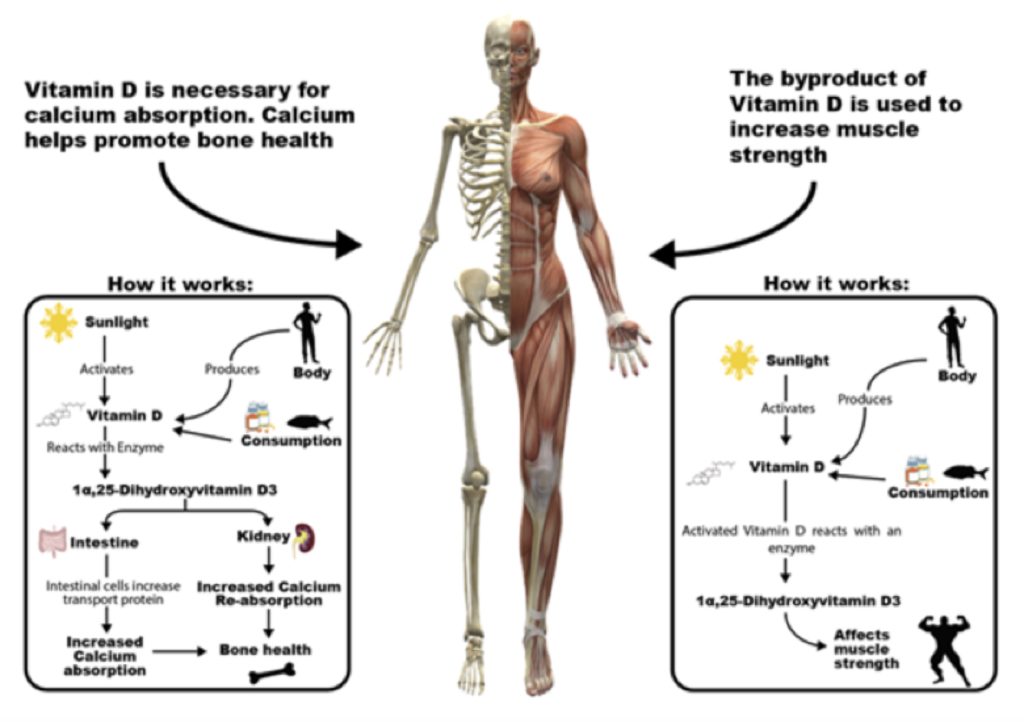
It was also found that there was a correlation in the amount of stress with the lower vitamin D levels. It is constructed that chronic stress can affect vitamin D levels, often leading to lower concentrations. The relationship is complex and involves several physiological mechanisms, primarily through the action of stress hormones like cortisol. Cortisol is a vital steroid hormone produced in the adrenal glands, located above the kidneys. It is often called the “stress hormone” because it plays a major role in the body’s response to stress, but it is involved in many other critical functions as well.
Alison M Brooks builds in her article entitled Assessment of dietary vitamin D intake and compliance with recommended vitamin D supplementation in division I collegiate athletes that athletes, particularly in the northern climates should increase their intake of Vitamin D supplementation. Their research found that after eating the right foods there was an increase in serum levels of vitamin D. For twelve weeks Division I athletes at the University of Wisconsin, Madison ate foods with high concentrations of vitamin D like fatty fish, mushrooms, and eggs.
Is Vitamin D really Effective?
One common counterargument is: “The evidence for performance enhancement from vitamin D supplementation is inconsistent and, in some cases, weak.” Indeed, while many studies show beneficial associations, randomized controlled trials (RCTs) in athletes yield mixed results. For example, one meta-analysis concluded that supplementation improved lower-limb strength but not upper-body strength or power. Another review observed that benefits on aerobic capacity and performance metrics remain unclear. Thus, while there is rationale for improvement, the effect size may be small, context-dependent, and perhaps limited to those with initial insufficiency.
Where One Lives and How Much Vitamin D They Receive
Where a person lives can significantly influence how much vitamin D they obtain, primarily because sunlight exposure is the main natural source of the vitamin. People who live at higher latitudes and are farther from the equator receive less ultraviolet B radiation from the sun, especially during winter months when the sun’s rays are weaker and daylight hours are shorter. As a result, their skin produces far less vitamin D compared to those living in tropical or subtropical regions. Christina Kate Langley says, “individuals living at latitudes over 35⁰N experience seasonal variations and have severely reduced to negligible amounts of UVb exposure in the winter and autumn months” (Christina Kate Langley). Additionally, urban environments with tall buildings, air pollution, or frequent cloud cover can further reduce sunlight exposure. Cultural and lifestyle factors, such as clothing that covers most of the body or spending large amounts of time indoors, also limit UVB exposure. Conversely, individuals living in sun-rich climates who spend time outdoors typically synthesize more vitamin D naturally. Thus, geography and lifestyle tied to location play a major role in determining vitamin D status, often making supplementation more necessary for people in northern or less sunny regions.
Immune Function and Recovery
Recovery after an exercise can be split into three categories: recover immediately after an exhausting exercise; short term recovery between sets; and recovery between training sessions. Recovery between training sessions is particularly important since complete recovery also helps avoid excessive training or overtraining syndrome. Fatigued subjects generally report muscle injuries, inflammation and a state of oxidative stress after intense physical exercises.
An appropriate micronutritional intake could be beneficial through acceleration of the return to hydromineral and antioxidant equilibrium necessary for muscular recovery. Many micronutritional supplements are currently available on the market and widely used by athletes to increase their antioxidant status. These supplements generally contain a complex of vitamins and minerals recognized for their antioxidant effects, such as vitamin C, vitamin E, b-carotene, zinc, selenium, and manganese. (Jeanick Brisswater)
Recent studies have established a link between vitamin D deficiency and diseases like cardiovascular disease, diabetes, hypertension, certain types of cancer as well as autoimmune disorders such as multiple sclerosis, rheumatoid arthritis and inflammatory bowel disease— all of which have a chance to impact athletic performance. Figure 6 reveals many common clinical features and shows how increasing vitamin D could help decrease the risk of these diseases developing.
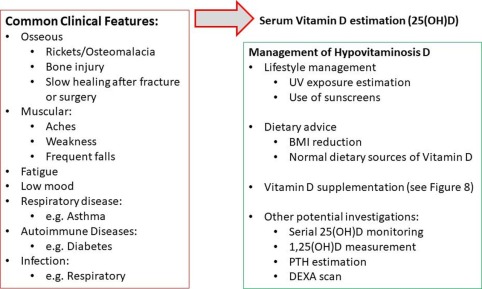
It has been shown that vitamin D up regulates gene expression of antimicrobial peptides, which are important to immune defense, as well as down regulates expression of inflammatory cytokines. Cytokines are small proteins secreted by immune and other cells that play a critical role in regulating immune responses and inflammation. (Bennet Alexander Leitch)
How Much is Sufficient for an Athlete?
A possible limitation to my argument, that athletes should increase their vitamin D intake, is that the optimal vitamin D intake, target serum 25(OH)D concentration, and supplementation strategy for athletes are not universally agreed upon. For example, a recent intervention study in German athletes found that individualized loading doses achieved a 25(OH)D level of ~41 ng/mL and that maintenance doses of 1,000 IU/day may not be sufficient in athletes to retain target levels. Previous work suggests the standard adult recommendation (e.g., 600–800 IU/day) may be insufficient for athletes. BioMed Central The review by Larson-Meyer & Willis notes there are no athlete-specific guidelines yet. Gatorade Sports Science Institute Therefore, recommending “increase intake” must be accompanied by monitoring and individualized strategy rather than blanket dosing. Vitamin D toxicity is very rare and is described when serum 25(OH)D levels are >150 ng/ml with high serum calcium concentrations. In most scenarios it is due to unintentional ingestion of extreme doses, well above 50,000 IU for several months (Larson-Meyer, 2013). Classic signs of vitamin D toxicity include: fatigue, constipation, forgetfulness, nausea, back pain, vomiting, hypertension, heart rhythm abnormalities and tissue calcification (Bennett Alexander Leitch).
Sources of Vitamin D for Athletes
Athletes have several avenues to boost their vitamin D levels, each with its own advantages and limitations. The primary natural source is sunlight exposure, specifically ultraviolet B (UVB) rays, which trigger vitamin D synthesis in the skin. For athletes, this means incorporating outdoor training sessions during peak sunlight hours—typically between 10 a.m. and 3 p.m.—when UVB penetration is highest. However, as noted earlier, factors like geographic location, season, and skin pigmentation can hinder this process. Darker skin tones require longer exposure to produce equivalent amounts of vitamin D compared to lighter skin, which is particularly relevant for diverse athletic populations. A practical recommendation is 10-30 minutes of midday sun exposure several times a week, exposing arms, legs, and face without sunscreen, but athletes must balance this with skin cancer risks by limiting time and using protective measures afterward.
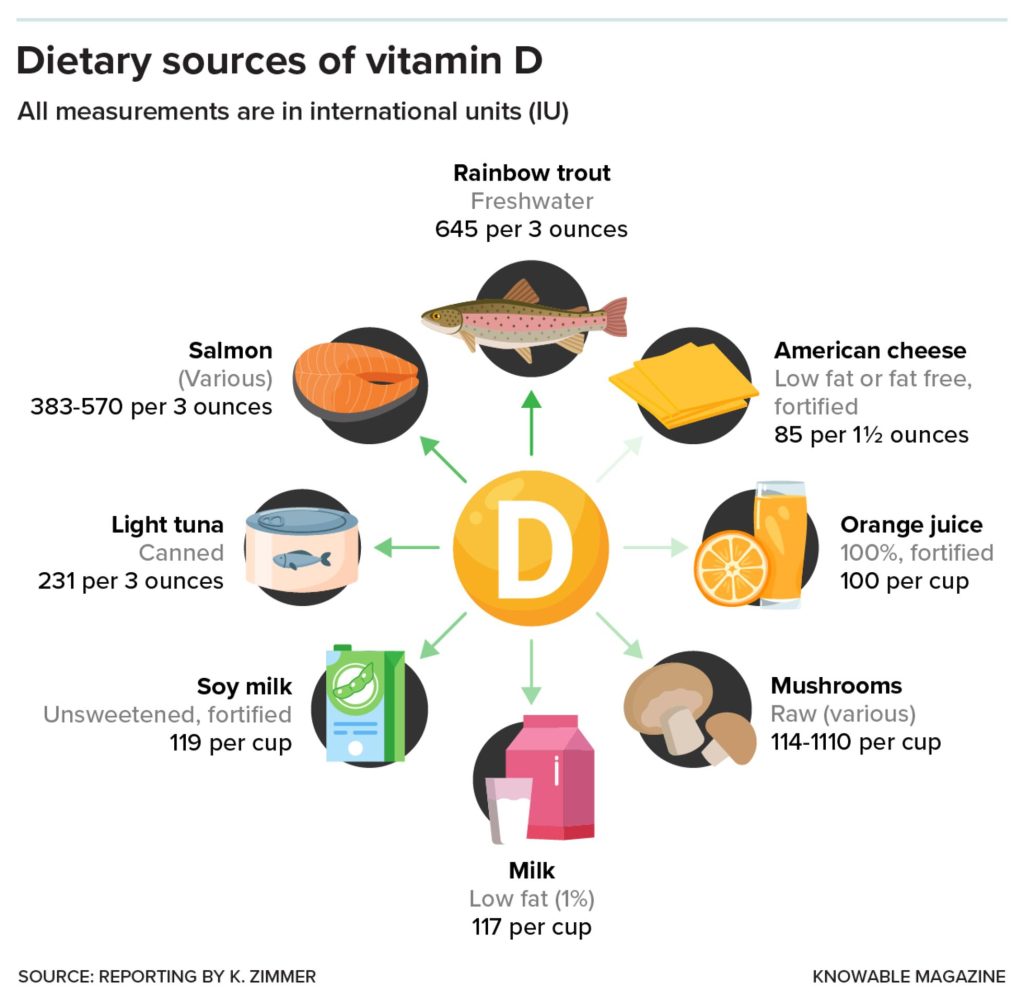
Dietary sources provide another reliable option, though they are limited in variety and quantity. Fatty fish like salmon, mackerel, and sardines are among the richest natural food sources, offering 400-600 IU per 3-ounce serving. Fortified foods, such as milk, orange juice, cereals, and plant-based alternatives (e.g., almond or soy milk), can contribute 100-200 IU per serving. Egg yolks, beef liver, and certain mushrooms exposed to UV light (like shiitake) also add modest amounts. Figure 7 displays the many options of dietary sources of vitamin D. For vegetarian or vegan athletes, fortified options and UV-treated mushrooms become essential. However, studies indicate that diet alone often falls short for athletes’ needs; for instance, a review from the Gatorade Sports Science Institute highlights that even with intentional inclusion, many athletes only achieve 200-400 IU daily from food, far below the 1,000-2,000 IU often required to correct deficiencies. Athletes should prioritize third-party tested products, as per USP or NSF certifications, to ensure purity and avoid contaminants like banned substances—a critical concern in competitive sports where organizations like the USADA flag risky supplements.
Testing and Monitoring Vitamin D Levels
To optimize intake, athletes must first assess their baseline status through blood tests measuring serum 25-hydroxyvitamin D [25(OH)D], the most accurate indicator of vitamin D stores. Deficiency is typically defined as <20 ng/mL, insufficiency as 20-30 ng/mL, and sufficiency as >30 ng/mL, though some experts advocate for 40-60 ng/mL in athletes for peak performance benefits. Testing is straightforward via a simple venipuncture and should be conducted seasonally, especially in winter or after periods of indoor training. For team sports, programs like those at NCAA Division I universities often integrate routine screening into preseason physicals.
Monitoring allows for personalized strategies. If levels are low, a loading phase might involve 4,000-10,000 IU daily for 4-8 weeks, followed by maintenance at 1,000-2,000 IU. Re-testing every 3-6 months ensures adjustments, preventing both deficiency and excess. This individualized approach addresses variations in absorption influenced by body fat, age, and genetics—older athletes or those with higher BMI may need higher doses due to sequestration in adipose tissue.
Gender Differences in Vitamin D Intake
Emerging research underscores gender-specific considerations in vitamin D’s impact on athletes. Female athletes, particularly those in indoor sports like volleyball or gymnastics, appear more susceptible to deficiency. A 2025 study by Alvaro Miguel-Ortega examined elite female indoor players and found that non-supplemented vitamin D levels correlated with diminished aerobic and neuromuscular performance, exacerbated by training stress and limited UVB exposure. This may stem from hormonal factors; estrogen influences vitamin D metabolism, and menstrual cycle phases could affect serum levels. Additionally, female athletes face higher risks of bone-related issues like the female athlete triad (energy deficiency, menstrual dysfunction, low bone density), where vitamin D plays a protective role.
In contrast, male athletes in outdoor sports might maintain better levels naturally, but studies show deficiencies across genders. A meta-analysis from 2024 analyzed vitamin D3 supplementation’s effects on lower-limb strength, revealing consistent gains in both sexes, though females showed slightly greater responsiveness in neuromuscular parameters. Coaches should tailor protocols, perhaps with higher doses for females during high-stress periods, while monitoring for interactions with oral contraceptives, which can alter vitamin D binding.
Vitamin D levels often differ by gender due to variations in body fat distribution, hormone regulation, sun exposure, and dietary habits, with women—especially female athletes—showing higher rates of deficiency in some populations. These differences can affect athletes’ bone density, muscle strength, and recovery, potentially increasing injury risk or impairing performance if vitamin D levels are inadequate. Understanding gender-based differences allows athletes and coaches to better tailor supplementation and nutrition strategies to support optimal health and performance.
Respiratory Health and Infection Prevention
Beyond bones and muscles, vitamin D bolsters respiratory health, crucial for athletes prone to upper respiratory tract infections (URTIs) from intense training and travel. Vitamin D enhances innate immunity by modulating antimicrobial peptides like cathelicidin, which combat pathogens. A 2020 review, updated with post-COVID data, linked supplementation to reduced COVID-19 risk and severity in athletes, attributing this to vitamin D’s anti-inflammatory effects and role in lung epithelial defense. Figure 8 shows how the body digests vitamin D and how it helps with respiratory health and recovery. For endurance athletes like runners or cyclists, who experience immunosuppression post-exercise, maintaining optimal levels could shorten illness duration and preserve training consistency.
Recent trials support this: A 2024 systematic review of elite athletes found that vitamin D supplementation improved aerobic endurance, partly by mitigating inflammation and supporting oxygen utilization in lungs and muscles. During pandemics or flu seasons, teams have adopted protocols combining vitamin D with zinc for synergistic immune support, reducing absenteeis

Conclusion
In sum, the evidence supports the argument that athletes should increase their vitamin D intake, particularly when insufficiency is present. The prevalence of low vitamin D status among athletes is high. Vitamin D influences bone health, muscle function, immune resilience, and potentially other performance-relevant systems. While the literature on performance enhancement is not uniformly conclusive, the physiological rationale and injury-prevention implications give strong support to the strategy of ensuring athletes maintain adequate vitamin D status. For athletes and their support teams, the practical path is to test serum 25(OH)D, set appropriate targets (e.g., ≥30–40 ng/mL), supplement/loading as necessary, combine with sun exposure and dietary sources, monitor status, and integrate vitamin D into broader performance nutrition and recovery strategies. By doing so, athletes can maximize their potential gains, reduce injury risk, and support long-term musculoskeletal health and performance longevity. Although many athletes may benefit from supplementation, excessive intake beyond safe upper limits without monitoring is not advisable. Toxicity, though uncommon, can occur (hypercalcemia, kidney issues). Regular blood testing is prudent when high doses are used, and monthly or quarterly checks may be advised in sport settings.