Introduction
On numerous playing fields in my neighborhood and elsewhere in the nation, I observe this same crossroads. There are those who demand playing fields that are open almost year round and can withstand an entire day’s worth of games without becoming muddy. Then, there are those concerned with the prospect of being expected to play and play games on turf so hot it might as well be a frying pan and potentially filled with chemicals we are currently trying to extract from our drinking water. The decision to go with grass fields versus turf is no longer simply about muddy shoes and rained out games.
Per and polyfluoroalkyl substances, commonly known as PFAS, are actually a vast group of manufactured forever chemicals, meaning they are known to decay very slowly in aquatic environments, on land, and within humans. In April 2024, the USEPA established strict national standards for several PFAS in drinking water, as they are known to present health risks, regardless of exposure level (USEPA, 2024). On the other hand, increased summer temperatures and heatwaves are altering the perceived level of safety for enjoying outdoor playtime.
In this blog chapter, I present a question that many school boards are faced with today. Should communities continue to install more synthetic turf fields, or should they implement a ‘grass first’ policy in this era of PFAS regulation and dangerous heat events? Communities should follow a ‘grass first’ policy, and any synthetic turf fields that are still installed should be managed in order to dramatically reduce PFAS, heat, and runoff related risks.
Why synthetic turf became so popular
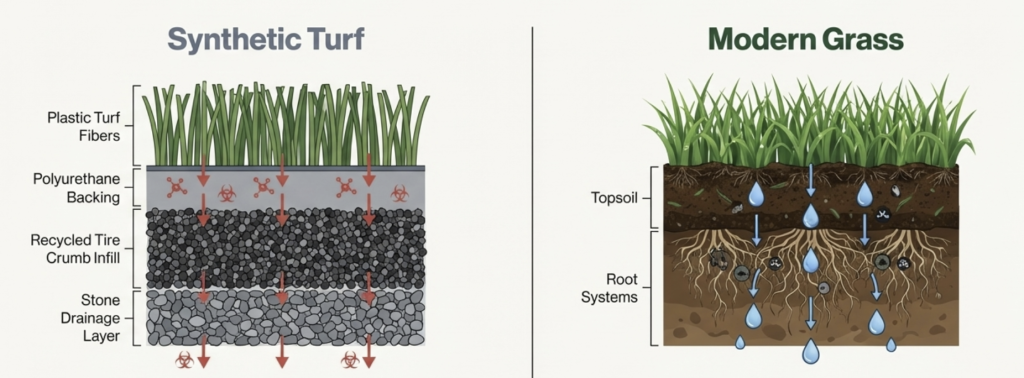
In order to understand why this decision is so difficult, it’s important to understand what today’s turf field actually is and why they’re so appealing.
A standard turf field is plastic grass laid on a precisely designed layer. The plastic grass is designed to mimic real grass, and between the plastic grass is an infill layer, which is heavier, absorbs shock, and is more like real grass than regular turf fields. Then, under the plastic grass is padding and a drained stoney layer to allow the water to run right off and keep the turf field level and dry.
The turf fields addressed all those issues at the same time. The turf fields are capable of being used for soccer, football, field hockey, and lacrosse games, as well as other activities, all day and all night, regardless of whether it is wet or dry. The turf fields will not become muddy pits in March, and they will never need to be rested as grass does. The turf fields are desirable because they can be used almost nonstop, with games right after another. On any busy Saturday, games for kids and high schools, as well as games for sports clubs, may be held on one turf field.
These benefits are what led many communities to install turf sports fields in the past two decades. What is problematic is that turf’s very qualities, which are plastic materials, dark colors, efficient drainage, and extensive usage, are now emerging as issues pertaining to PFAS, heat, injuries, and microplastics.
What PFAS are and why they are important in various fields
Per and polyfluoroalkyl substances are manufactured chemical substances which are used in the mass production of hundreds of goods, as they are impermeable to water, oil, and high temperatures. The name ‘forever chemical’ is assigned to these chemical substances as they decompose and accumulate in the soil, liquid, and living systems (European Chemicals Agency, 2023). In 2023, The United States Geological Survey reported that at least ‘forty five percent’ of tap water tested in the ‘United States’ contained ‘one or more PFAS’ (United States Geological Survey, 2023). This indicates that exposure is already taking place merely by entering the ‘playground field’s’ surroundings without entering the field itself.
There are various entry points of PFAS into the turf. The turf itself and the backing layers are usually comprised of plastic, which may contain PFAS process aids as part of the the additives. Testing in both Europe and America did show high levels of non extractable fluorine within the turf and the backing layers, signifying the presence of PFAS related chemistry, even if all compounds were not detected (Lauria et al, 2022). If the infill layer is comprised of recycled tire crumb, then the additives and road related contaminants are part of the history of the rubber itself (California Department of Toxic Substances Control, 2024).
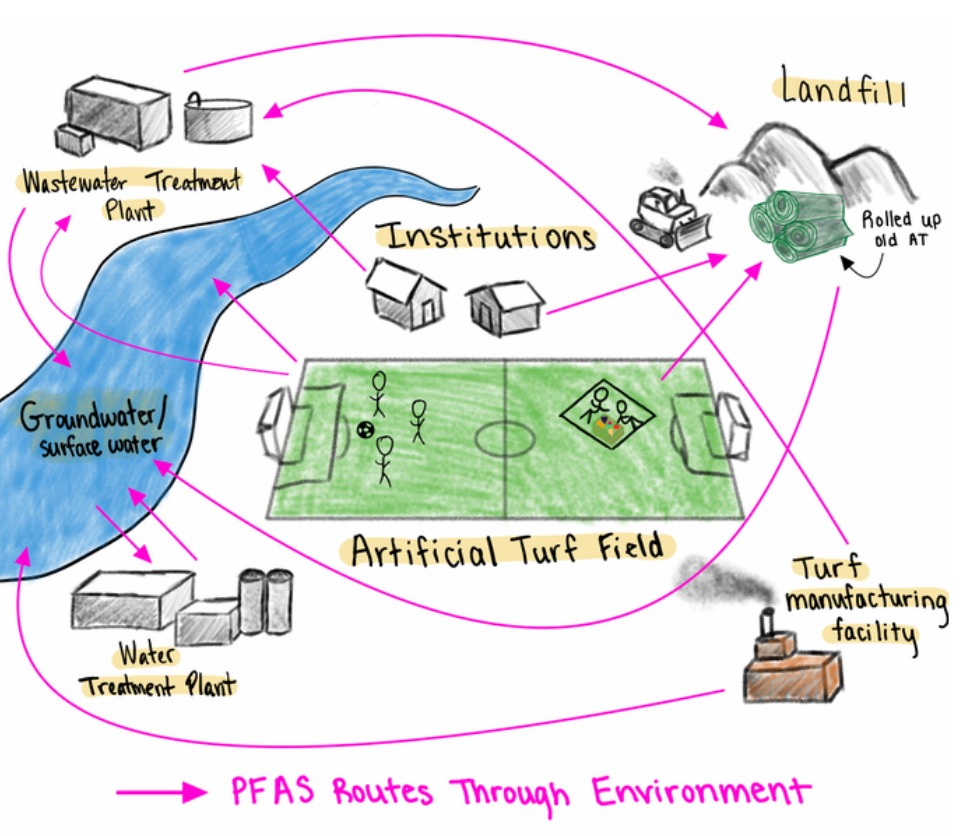
In response to the question of whether turf systems contain PFAS and whether players are potentially being exposed, investigators have considered numerous components within the turf system. Total fluorine, an indicator chemical for fluorinated compounds, has been found in turf fibers, turf backing, and certain types of turf infill used in various parts of the world (Lauria et al, 2022). Federal researchers, in their studies of recycled tire crumb, have also shown that the components are indeed present and certain exposure is possible if used as turf infill in fields and playgrounds (U.S. Environmental Protection Agency, 2025). The concentration level within the outdoor air during play activities is comparable to background concentration, but certain factors affect overall exposure.
The important thing here is not that all turf fields are inherently leading to high PFAS exposure. Rather, what we understand from the evidence is that there is PFAS related chemistry in turf components, and this exposure is potentially through contact. When we understand this in the context of the reality of PFAS being found in tap water, it is much more difficult to allow more sources of PFAS into the landscape without any plan to mitigate this risk.
But simple practices are important, too. Washing hands after practice, bandaging and cleaning cuts, removing cleats before entering the house, and keeping food out of the playing surface go a long way toward keeping players from transferring material from the field, either by ingestion or by bringing it into the home on their bodies. These are crucial practices, particularly for younger kids, who sit on the ground, tie their shoes, snack, and spend extended periods in contact with the turf.
Heat and player safety on synthetic turf
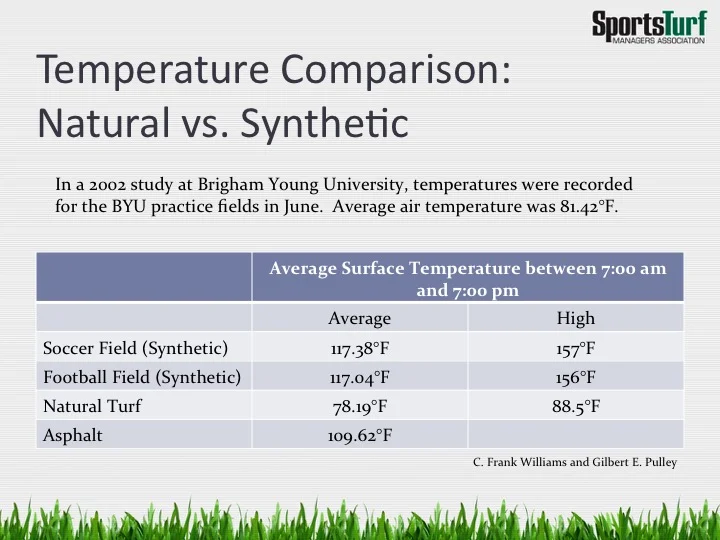
Heat, without any added chemicals, is already problematic for turf fields. During the hot part of the day, the dark infill and plastic turf surface serve as a solar collector. The turf absorbs and holds the radiation, as opposed to cooling by evaporating, much as regular grass does. Studies conducted by turf research organizations and park associations have shown temperatures on synthetic turf much higher than air temperatures and natural turf temperatures, reaching temperatures over one hundred and fifty degrees Fahrenheit on hot summer days (Penn State Center for Sports Surface Research, n d ; National Recreation and Park Association, 2019).
On paper, turf can be marketed as all weather and all day, but players, coaches, and parents come to understand just how false this is as they notice the turf is so hot they can’t touch it. Practices are moved to early mornings or late evenings. The younger players are winded faster, as noticed by the referees. Parents gather under portable tents or in thin strips of shade. Ice is brought out by trainers. Sometimes, this field, intended to serve as greater access, becomes simply a hot box in the middle of the day.
In order to cope with the effects of the high temperatures, communities employ various measures, including the use of water sprays to reduce the temperature of the surface, provision of shades and benches, mist stations, or light colored infill. Although those measures may improve conditions, they will not affect the inherent properties of a dark plastic surface being under the full glare of the sun. If the surface is much hotter than the air, then the danger of heat related illnesses will also increase.
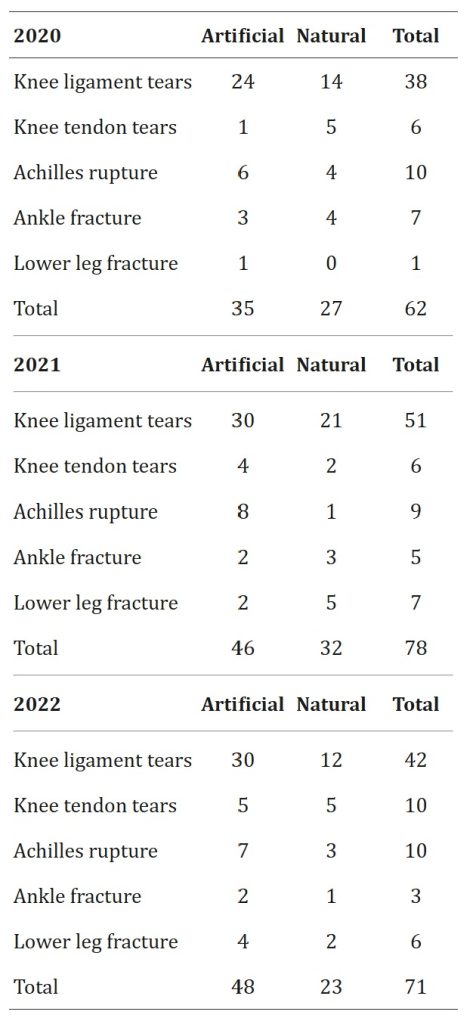
Heat is linked to injuries, as well. The knees, ankles, and non contact injuries, for example, are of great concern to players and coaches as they can abruptly terminate the whole season. There have been several studies carried out on professional football players recently, and they revealed an increased incidence of ending the whole season with injuries to the lower extremities on artificial turf compared to grass (McCormick et al, 2024; Venishetty et al, 2024). In certain studies, the outcome varied depending on the player’s position, sex, or level, and no magic number was identified. Yet, players often refer to the forgiving nature of grass as the foot hits the ground awkwardly, and the cleat gets caught.
None of this is to say, by the way, that turf is inherently dangerous or that grass is perfect. Neglectfully cared for grass fields can also be dangerous. But when we line all this evidence up against the increased temperatures and the evidence of injuries to the lower body on turf fields, the onus is on us to question why this should be our choice as the norm for youth sports.
Water, Microplastics, and the Discipline as Part of a Watershed

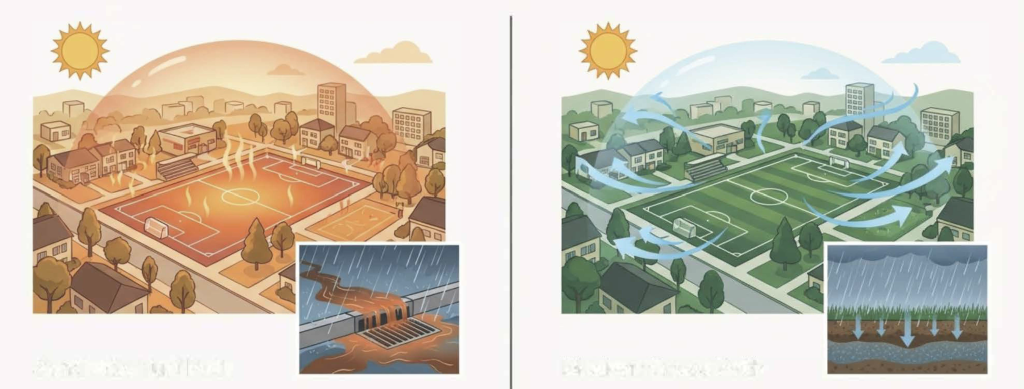
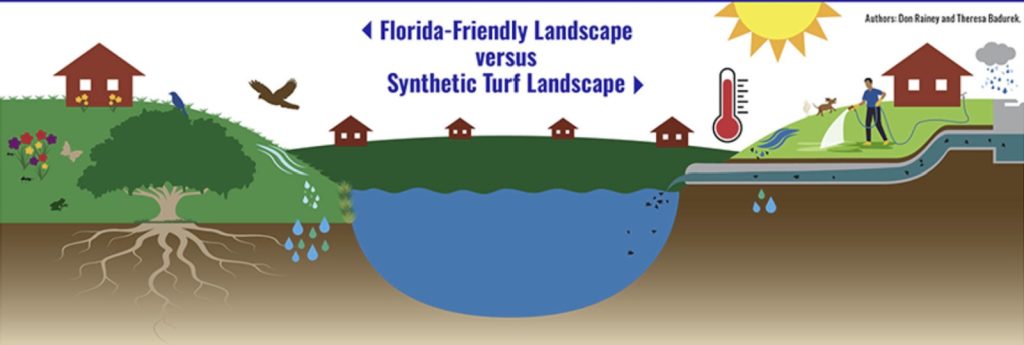
There is no playing field without the watershed in which it is contained. Rainfall on the field eventually finds its way into the storm drains, creeks, and rivers near the field. Heavy storms, with accompanying high winds, hurry this process along.
Synthetic turf fields are designed to have efficient drainage. The plastic turf and rock drainage layer allow water to flow through easily and then escape along the edges or drainage pipes beneath the turf. In doing so, this water takes with it very fine plastic and rubber fragments. Microplastics generated by blade wear, broken fragments of turf infill, and other detritus can then be washed off the playing field and accumulate in nearby soils and streams downslope of the sports complex (European Chemicals Agency, 2023). The debris is simply too small to be raked and removable by hand.
The European Union regulators, in recognizing the concern about microplastics, enacted a restriction on certain intentionally added microplastics, plastic infill used on sports grounds, with an extended transition period for the adjustment of facilities (Zuccaro et al., 2024). Of course, this action does not imply that all pellets shed from this material will now appear in the ocean. The point is simply the collective contribution is significant enough to regulate.
The problem can be mitigated, but never entirely solved, by good design. Edge barriers will help keep run off from leaking onto the playing field. Capture boxes near drains will hold particles, which will then enter streams, and these can be regularly cleaned. Vegetated swales or planters filled with deep rooted indigenous vegetation will help slow down water and entice it to percolate through soils. In the case of grass fields, appropriate soils will allow run off to drain slowly, as opposed to immediately on the surface. When a neighborhood decides on what type of field it will have, in effect, it is deciding on the flow of water, heat, and plastic into the neighborhood as well.
Money, Time, and What Towns Mean by Value
PFAS and heated turf are often brought into discussions with the following question being raised. What about cost considerations? Some may deem turf as being costly to install and less costly in the long run, whereas grass is less costly to install, yet more costly to maintain. Reality is somewhat complex here.
The typical synthetic turf field is estimated to require a very high amount of construction cost. There is also known removal and replacement cost after the completion of its life, usually eight to twelve years. The natural turf field may be installed at only a fraction of this cost, but extensive other activities are involved, like mowing, overseeding, fertilization, irrigating, and resting. There is an independent analysis report undertaken by Montgomery County in Maryland, which compared synthetic turf and natural turf fields and found no overall winner on grounds of cost. It all depends on climate, level of usage, and whether the disposal and replacement cost is counted as part of the total cost (Montgomery County Maryland Office of Legislative Oversight, 2024).
In order to understand the trade offs, it is easier to visualize two villages.
• Town One constructs one synthetic turf field for over one million dollars. The turf is usable almost all year round and can accommodate many teams in one day. Each year, the town allocates funds for grooming, infill top off, deep cleaning, seam repairs, and, at some point, the whole carpet and pad removal and replacements. Heat related schedule modifications and potential injury differentials appear in other, less easy to value ways, affecting players and parents.
• Town Two’s plan is to replace two natural grass fields. The plan is to install well drained soil, strong types of grass, and lights in the fields. The construction expenses will be less than the artificial turf, whereas the maintenance will be more. With proper management, these grounds will allow many more playing hours than the older systems of natural grass, especially in the evenings since the temperatures are less.
Both of the towns wind up with many play hours, but they go about it in different ways. The question is, what does value look like for both communities. Creating a simple chart of various types of surfaces on the top row and uses on the side, like player safety, summer play hours, spring and fall play hours, water effects, trash and micro plastics, upfront cost, and the yearly cost, will allow the leadership and citizens to see agreements and disagreements on priorities.
Policy signals on PFAS and microplastics
Policies are more than simply regulations. Policies are signals about risks that governments are now concerned about. The PFAS National Primary Drinking Water Regulation, adopted by the Environmental Protection Agency, will reduce exposure to PFAS by one hundred million people and thousands of deaths will be prevented in the long run, as stated by U.S. Environmental Protection Agency in 2024. Numbers like this are what will remind city leaders that PFAS are more than just a chemical issue.
In relation to solid waste, research on recycled tire crumb conducted by the U.S. government confirms the presence of chemicals in tire crumb rubber used on sports fields and playgrounds and indicates that exposure is potentially occurring under normal play conditions (U.S. Environmental Protection Agency, 2025). In Europe, the plan to phase out plastic infill as part of the microplastics policy shifts the sports field management and sports equipment industry toward alternatives and innovations (Zuccaro et al., 2024).
Some U.S. cities have already begun to require turf suppliers to list the constituents of turf fibers, backing, coatings, and infill. Some are revisiting purchasing policy to exclude turf containing PFAS. Together, this is indicative of what should be expected in the coming decade for communities interested in building turf fields, as planning for only today is likely to prove costly tomorrow.
“If a town still decides to build a synthetic field”
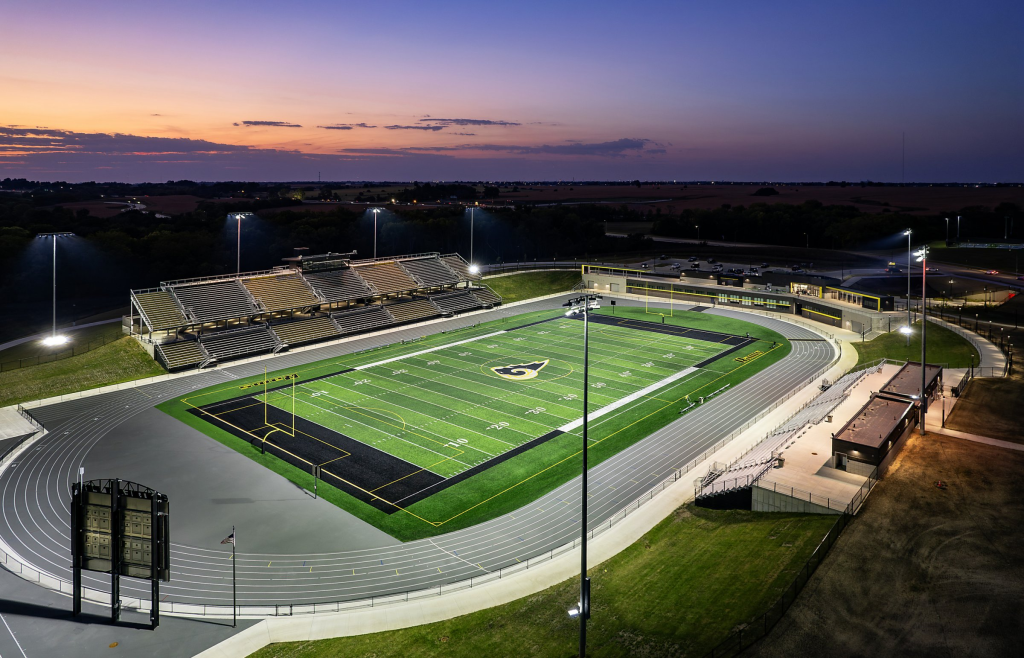
In spite of all the above concerns, there will still be communities which will opt for the construction or retention of synthetic turf sports grounds due to constraints and climate. When this is the case, all should aim to spend and build smarter and not act as if the risks are non existent.
‘A town which continues on turf can.’
• Require proof in writing that turf fibers, backing, and coatings are produced without intentionally added PFAS, and request results of total fluorine tests whenever possible (University of Massachusetts Lowell, 2024).
• Select infill materials without reliance on recycled tires, and reduce dust and particle migration.
• Edge barriers and capture boxes on drains should be designed in order to keep infill and microplastics from exiting the playing field.
• Develop designs for shade structures, access to water, and cooling systems so children can play safely under intense sunlight.
• Develop shoe standards with coaches and monitor the tread and shock absorption properties of the shoe.
• Make and implement an ‘end of life plan’ so that all components are aware of where they will go and what is required to dispose of them. None of these things will make a synthetic surface completely safe, but they are what the process of taking responsibility for a communal area, which relies on plastic and advanced chemistry, looks like.
What a Grass First strategy may look like
The “grass first” policy is more than just nostalgia for how things used to be. It is actually a very forward looking plan which attempts to capture as much benefit as possible from turf scheduling practices without the downside risks.
Grass first scheme begins with soil. The urban setting enhances the qualities of the soil, ensuring it drains well without being unstable. The urban setting chooses appropriate and robust types of grass adapted to the climate. The urban setting redesigns the land to allow draining of water along vegetated areas and drains, as opposed to sidewalks and roads. The urban setting rests high traffic areas before they become worn, posing hazards.
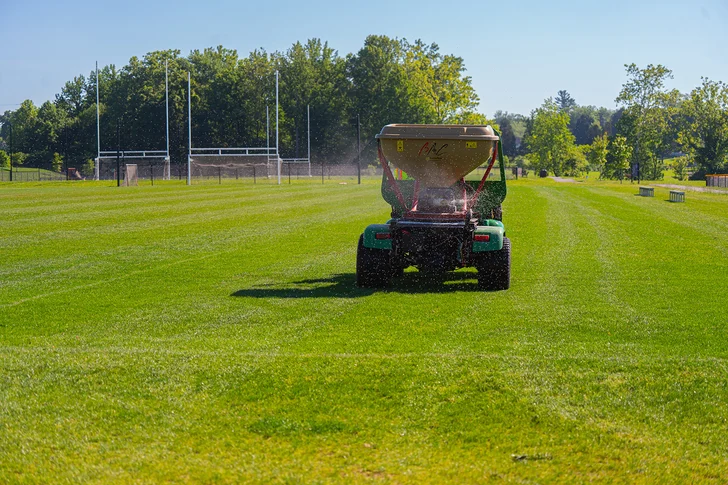
Scheduling and communication are also important. The coaches all use the same calendar, establish hourly rates, and recognize the need for downtime on the fields, just as on players. Watering is scheduled for cooler parts of the day to cut down on evaporation. Portable goal and line systems cut down on the use of the same piece of turf. The hottest parts of the day can be relinquished in favor of cooler evenings with lights. When done right, a grass first approach will allow grass to remain cooler than artificial turf, reduce microplastics, and still host busy seasons. It also gives communities flexibility on the future because, as mentioned, turf fields will require communities to replace large plastic sheets every decade.
Business ethics, fairness, and decision making

Playfields are more than sports facilities. Public spaces, they are paid for by tax dollars, used by children and adults, and flanked by neighbors, some of whom may or may not play on those facilities. This is why ethics are part of playfield design.
The citizens nearest to the field will personally be affected by the decision it makes. They will feel more warmth, more illumination in the night, and more small pieces of plastic in their gutters and yard. If the decision is to install turf, fairness dictates that the project should provide shade, water, and equipment to trap particles for both the citizens and the players. If the decision is to go for grass, fairness dictates that the whole township should benefit and have high quality grass fields, and not only in high class areas. Basic cleanliness, such as hand washing and keeping snacks out of the playing area, may seem trifling when air tests show low concentrations of the chemical. But this is as it should be, at the critical point and time where exposure is most likely to occur. Children kneeling, lacing their shoes, and snacking on the field are the focal point here. In ethics, this is not about removing all risk.
What we still need to learn

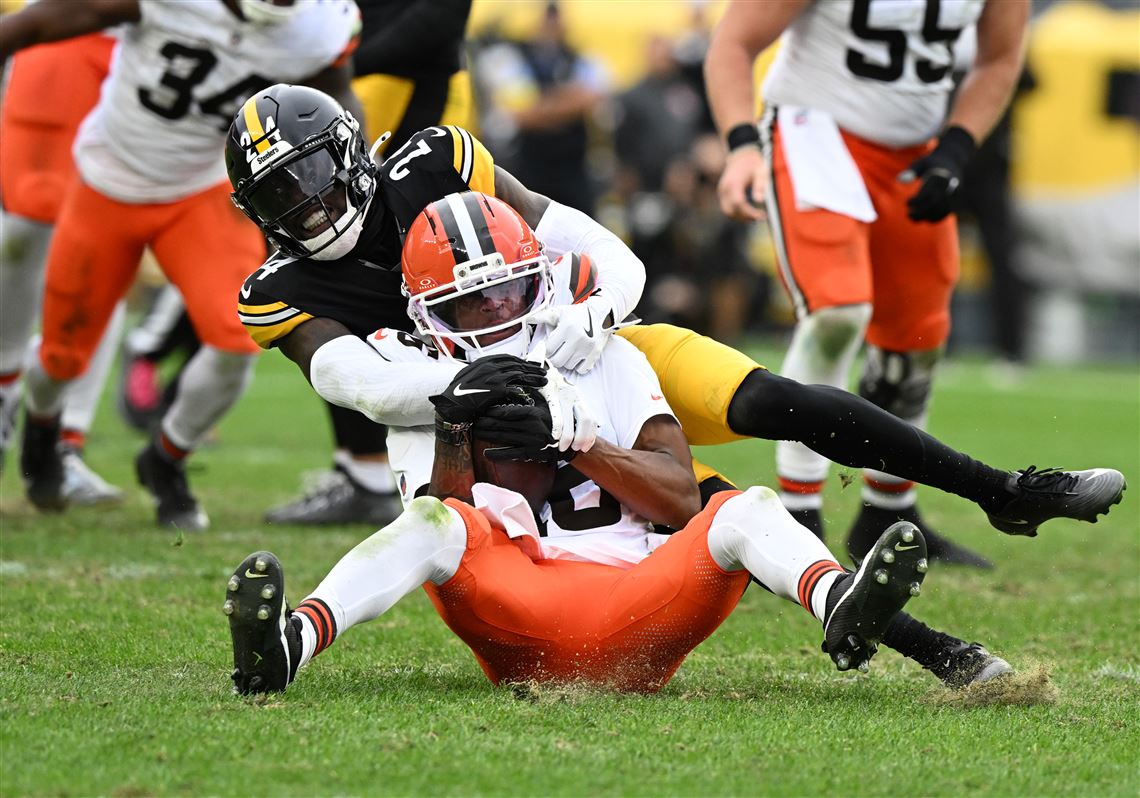
However, much still remains to be known. Future studies should observe players of all ages and sports over several seasons and compare synthetic and grass playing fields under real conditions. Data should be gathered on chemical content in skin residue, dust, and air during practices and games. And, where feasible, blood and urine analysis should also be part of the study, with strict precautions to preserve privacy.
Scientists should also monitor temperatures in the field, both on the surface and elevated, as well as water usage and break times, and evaluate particle trap and edge barrier effectiveness during storms. Open data would enable communities and researchers to validate claims by manufacturers and advance best practices more rapidly.
Injury research needs to keep associating various types of field tests, like traction, hardness, moisture, and temperature, with certain patterns of injuries. This will allow coaches and grounds staff to modify training schedules and equipment as soon as certain thresholds are crossed on the field. Science will always provide certain trade offs, but they will no longer be cryptic.
Community voices and local experience
At community discussions that I have been part of, no one is likely to question whether child athletes deserve safe playing fields. The lack of agreement is over what constitutes safe and what is deemed feasible within the town’s budget. One parent may prioritize knee injuries and feel safe if the thick, tough turf is level and predictable. Another parent may prioritize infrared and chemical touch and want an ever so slightly pitted grass field, one that does not burn their hand when they reach out to touch it. Other town members, those whose children are not involved in sports, are still interested in issues of noise, traffic, lights, and taxes spent. When unstated, all may wonder why the other side simply does not seem to care about safety and fairness, when they actually are caring about different parts of the same problem.
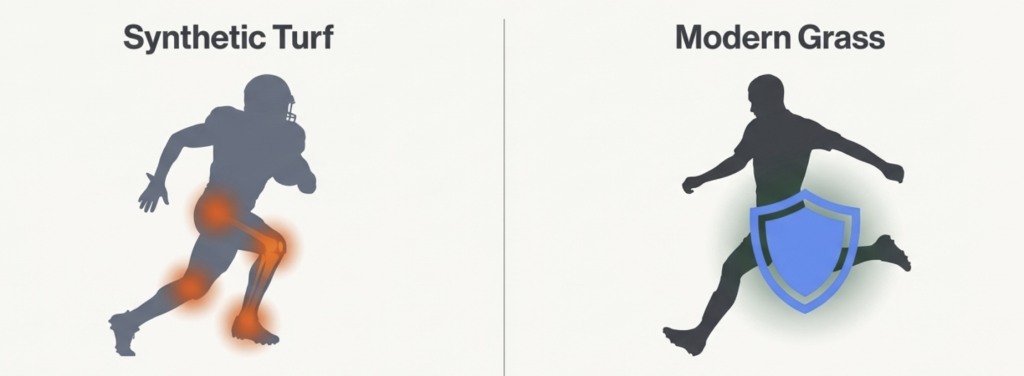
A “grass first” strategy is to ask communities to pause and listen to these concerns before they sign onto any contracts. Rather than beginning the conversation with consideration of a certain type of turf, communities can begin by considering a list of outcomes they are seeking. “No field should reach temperatures so high as to make it painful to touch, communities can demand, “Stormwater runoff should be cleaner than input, and children should not require special bylaws simply to snack on the sidelines.” Also, they may demand joint practice times without advantaging well organized teams at the expense of less organized groups. At this point, it may be clear whether those communities are looking for an improved grass or a synthetic turf with many more auxiliary safeguards.
The following tools may help improve communication. Comparison graphs of injury rates, temperatures, and the cost of field maintenance within the same geographical area are usually more persuasive than national statistics. Pictures taken during hot days illustrating the heat shimmer above ground level or players cooling their shoes in the shade can be very useful for board members who are less familiar with the conditions on the field by giving them an understanding of what young players experience. Organized walks where individuals are asked to walk on both a grass field and turf within the same day also provide opportunities for shared experiences. When individuals have personally felt the difference, it is difficult to refute concerns about the heat or picture the grass as something other than muddy and unpredictable.
Adaptation to climate change, Water, Long term planning
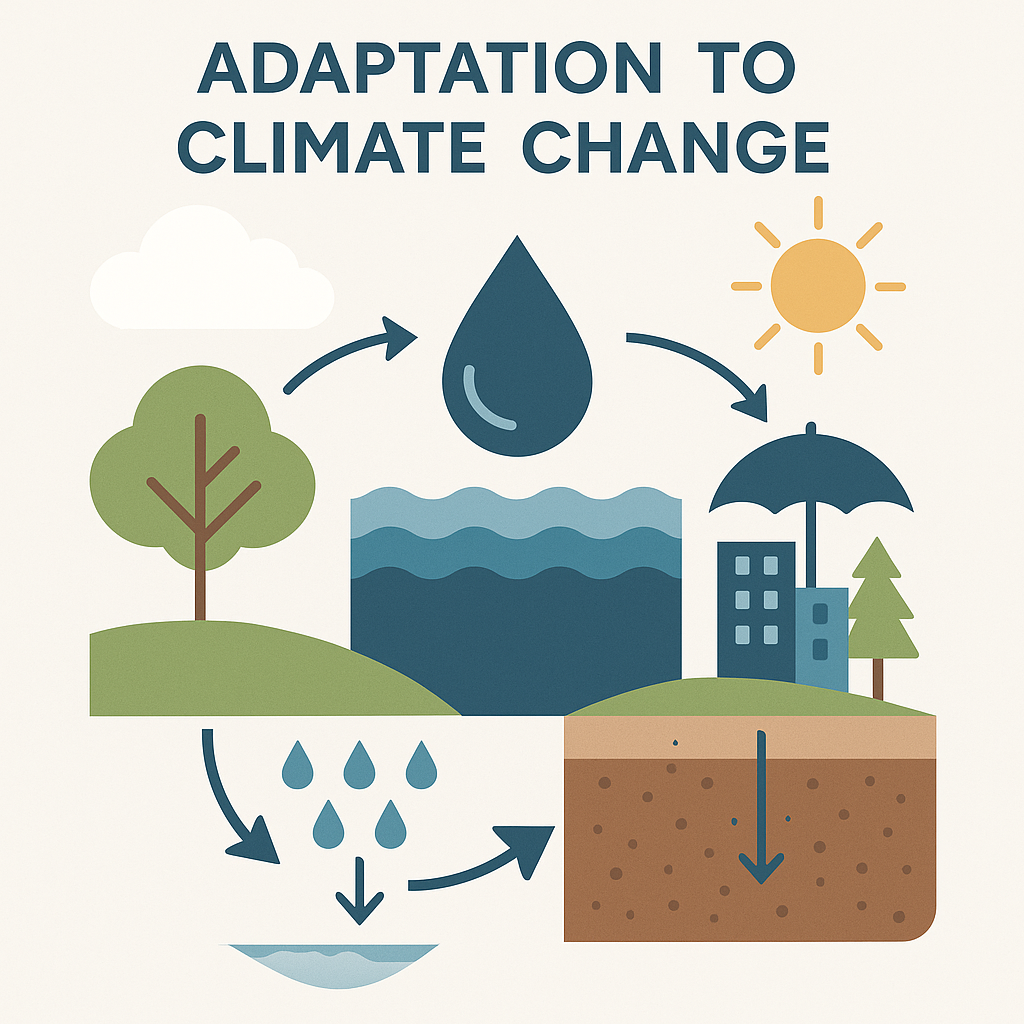
When climate patterns change, communities must contend with both warmer summer temperatures and heavier and more intense rainfall. The response of turf and grass to both conditions is very different. When it is warm, turf absorbs and slowly releases the heat, potentially keeping temperatures elevated well into the night. In contrast, turf rapidly drains rainwater, potentially causing stress on local pipe and stream systems unless appropriately sized. Grass, on the other hand, cools by evaporating and reduces the flow of rainwater through the soil and roots. Yet, irrigated land and neglected land will have less of both positive functions, as this land will be unprotected and may compact.
A town’s decision calculus, based as it is on average climate, entirely misses the point, which is dealing with the extremities. During periods of high temperatures and already low air quality, the addition of warm air and an extremely warm turf surface may very well exceed safe limits on practice, no matter how much water is brought by coaches. During a sudden high intensity hour long thunderstorm event in which large quantities of rainwater are deposited on an entire development full of impermeable surfaces, a turf field with high drainage rates will contribute to already full pipe capacities at the worst possible moment. Grass fields with high infiltration rates and those atop well structured, well rooted soils are able to capture and store all this rainwater, then disperse it slowly following the storm event. In this light, it is clear that the value of the ‘grass first’ norm is by no means simply in regards to injuries and PFAS exposure of players, sport by sport.
Another aspect, then, is the use of water. There is the perception, expressed by some opponents of grass sports fields, that they are irrigated and fertilized to the point of being wasteful, particularly in arid climates. There is, nonetheless, the potential, within a golf course mentality as opposed to what should be a sports oriented mentality, for excessive use of this kind. More and more, however, best practices in grass management reflect the use of moisture sensors and regionally adapted types of grass to keep fields playable without being wasteful of this resource. Additionally, there is emphasis on improving the organic content of the soil so as to increase its water carrying capacity between storms. When this is achieved, grass sports fields stop being actual drains on this resource and become resource conserving features, themselves.
Communities that think about the long term can potentially implement components of fields into large projects, including the return of tree canopy, the addition of shade along walkways to school, and linkage of green areas. The standalone turf field may seem efficient when considering only the playfield component, but it does very little to reduce the climate and provide habitat. The landscape of grass fields, trees, and indigenous planting can mitigate microclimate temperatures and provide aesthetic benefit to walking or biking to and from school. In this manner, the decision between turf and grass is also considering the type of climate ready town in which child athletes will mature into adulthood.
Innovation and future playing surfaces
Proponents of artificial turf have often suggested that the conflict will soon be resolved by advances in technology. There are prototype infills being developed from cork, coconut fibers, or other plant based materials, as well as prototype carpets that promise to lack certain types of chemical families. Some manufacturers are working on cooling systems to reflect more sunlight and improve air flow beneath the turf. On the other side of the issue, sports agronomists are working on novel combinations of cool season and warm season turf, bred to withstand high usage and extreme temperatures. Hybrid systems are being developed, trying to merge the benefits of both worlds by layering natural turf growth in the manner of a web of reinforcement fibers.
More detail The approach is much more cautious, encouraging innovation but requiring high standards of transparency and external evaluation. Industry can be required to list all significant ingredients, regardless of whether they are under current public scrutiny. Pilot studies can be organized in which a few trial fields are used to test the system, gathering extensive information on temperature, injuries, and demands on maintenance, as well as the quality of runoff. Player and coaching surveys can gather data on playing qualities as reflected by player experience, as opposed to lab analysis. After some years, comparisons can then be made with well managed turf fields and, if favorable, large investments may be begun in a successful technology.
The longest leap forward, then, may well come from those playfields and playgrounds whose designs are simple and reparably so, and are comprised of as much as is feasible through natural cycles. In this regard, well constructed grass systems are already well on their way. More creative drainage and watering systems, and more robust types of grass, will serve to enhance them without requiring communities to become mired in complicated patterns of disposal. In contrast, the majority of current synthetic systems are difficult to dispose of and rely on global supply chains for plastic and other specialized parts. Here, innovation and the ‘grass first’ philosophy, in fact, embrace technology.
Conclusion
The question asked in this chapter is whether it is appropriate to build more turf fields, given the rising PFAS regulations and warmer summer days. Given all the considerations of PFAS, temperature, injuries, microplastics, expense, and ethics, the best response is neither yes nor no. It is a change in the status quo.
Communities should stop The automatic process of building land fill contracts for new synthetic turf fields and establish ‘grassfirst’ practices on any newly proposed or renovated fields. Improved natural turf grounds, built with drainage, land health, and reasonable play patterns in mind, can provide countless safe playing hours without introducing any more PFAS based plastic and heat islands into any neighborhood.
In cases where the town is still considering artificial turf for identified reasons, this should only be done under tougher regulations. This may include considerations for low PFAS alternatives, systems to capture particle and runoff emissions, systems to handle heat, and strict financial allocations for removal at the completion of the turf’s life.
Ultimately, it is not simply which surface is preferable for play. It is which surface allows kids and communities to play, learn, and gather as well as possible, with as low risk as possible to their bodies and their tap water. In this day and age of PFAS in tap and escalating rates of heat waves, the only honest and appropriate response to this question is through a grass first and smarter turf plan.
Bibliography
Amenabar, T. (2024, March 12). Turf fields may have “forever chemicals.” Should kids be playing on them? The Washington Post. https://www.washingtonpost.com/wellness/2024/03/12/artificial-turf-pfas-chemicals/
Anzidei, M. (2025, June 15). MetLife installed “grass for future of FIFA” for Club World Cup, pitch manager says. The Athletic. https://www.nytimes.com/athletic/6424908/2025/06/13/club-world-cup-metlife-stadium-grass-field/
CapillaryFlow. (2023, September 12). Field of play: Take a deep dive into the artificial turf vs natural grass debate. CapillaryFlow. https://www.capillaryflow.com/reports/field-of-play-take-a-deep-dive-into-the-artificial-turf-vs-natural-grass-debate
CCGrass. (n.d.). Artificial grass infill in modern turf systems. CCGrass. https://www.ccgrass.com/artificial-grass-infill-in-modern-turf-systems/
CODE Sports staff. (2023, September). Natural grass v synthetic turf: Aaron Rodgers injury disaster reignites heated NFL debate. CODE Sports. https://www.codesports.com.au/
Gould, H. P., Lostetter, S. J., Samuelson, E. R., & Guyton, G. P. (2023). Lower extremity injury rates on artificial turf versus natural grass playing surfaces: A systematic review. The American Journal of Sports Medicine, 51(6), 1615–1621. https://doi.org/10.1177/03635465211069562
GRID-Arendal. (2021). PFAS pollution: From firefighting foams to football fields [Infographic]. GRID-Arendal & SOS-ZEROPOL2030. https://soszeropol2030.eu/resources/pfas-infographic-grid-arendal-sos-zeropol2030/
Hershman, E. B., Anderson, R., Bergfeld, J. A., Bradley, J. P., Coughlin, M. J., Johnson, R. J., Spindler, K. P., Wojtys, E., Powell, J. W., & National Football League Injury and Safety Panel. (2012). An analysis of specific lower extremity injury rates on grass and FieldTurf playing surfaces in National Football League games: 2000–2009 seasons. The American Journal of Sports Medicine, 40(10), 2200–2205. https://doi.org/10.1177/0363546512458888
Inside the NFL’s turf controversies, and why the World Cup plays a role. (2023, October 11). ESPN. https://www.espn.com/nfl/story/_/id/38624943/inside-nfl-turf-debate-injuries-safety-measures-more
iStock. (n.d.). Soil layers with grass and blue sky [Illustration]. iStock. https://www.istockphoto.com/
jkmitta. (2020, January 3). Natural grass and synthetic turf injury research. SportsField Management. https://sportsfieldmanagementonline.com/2020/01/03/natural-grass-and-synthetic-turf-injury-research/11008/
Johnson, C. K. (2023, October 9). What does the science say about the grass vs. turf debate in sports? AP News. https://apnews.com/article/nfl-aaron-rodgers-achilles-grass-artificial-turf-79212f5443cd2a0d30fe8c9d981b13c0
Lambeau surface kept safe and soft through technology. (2012, January 14). Milwaukee Journal Sentinel. http://www.jsonline.com/sports/packers/lambeau-surface-kept-safe-and-soft-through-technology-763p13j-137327223.html
Loughran, G. J., Vulpis, C. T., Murphy, J. P., Weiner, D. A., Svoboda, S. J., Hinton, R. Y., & Milzman, D. P. (2019). Incidence of knee injuries on artificial turf versus natural grass in National Collegiate Athletic Association American football: 2004–2005 through 2013–2014 seasons. The American Journal of Sports Medicine, 47(6), 1294–1301. https://doi.org/10.1177/0363546519833925
MetLife Stadium turf injuries: Why NFL players complain about Jets, Giants playing surface. (2023, November 24). The Sporting News. https://www.sportingnews.com/us/nfl/news/metlife-stadium-turf-injuries-jets-giants/e45f3044ddf81e89345d5b80
Myrick, S. (2019, May 1). Synthetic sports fields and the heat island effect. Parks & Recreation Magazine. National Recreation and Park Association. https://www.nrpa.org/parks-recreation-magazine/2019/may/synthetic-sports-fields-and-the-heat-island-effect/
PFAS Project Lab. (2023). PFAS in artificial turf fields: Uncertainties and cause for concern [Fact sheet]. Northeastern University. https://pfasproject.com/2023/07/25/new-pfas-and-artificial-turf-fact-sheet/
Paliobeis, A., Sivasundaram, L., Knapik, D. M., Labelle, M. W., Olson, M., Karns, M. R., Salata, M. J., & Voos, J. E. (2021). Injury incidence is higher on artificial turf compared with natural grass in high school athletes: A retrospective cohort study. Current Orthopaedic Practice, 32(4), 355–360. https://doi.org/10.1097/BCO.0000000000001012
Regulation (EU) 2023/2055 of 25 October 2023 amending Annex XVII to Regulation (EC) No 1907/2006 of the European Parliament and of the Council as regards synthetic polymer microparticles. (2023). Official Journal of the European Union. https://eur-lex.europa.eu/legal-content/EN/TXT/?uri=CELEX:32023R2055
Safe Healthy Playing Fields. (n.d.). Heat levels on synthetic turf. Safe Healthy Playing Fields. https://www.safehealthyplayingfields.org/heat-levels-synthetic-turf/
Synthetic turf is hazardous. (n.d.). Beyond Plastics. https://www.beyondplastics.org/fact-sheets/synthetic-turf
Tretter, J. C. (n.d.). Only natural grass can level the NFL’s playing field. NFL Players Association. https://nflpa.com/posts/only-natural-grass-can-level-the-nfls-playing-field
Understanding why NFL players prefer artificial turf over natural grass. (2025, April 17). Turf Factory Direct. https://turffactorydirect.com/blog/what-is-nfl-turf-made-of/
University of Florida IFAS Gardening Solutions. (n.d.). Synthetic turfgrass: A Florida-friendly perspective [Infographic]. UF/IFAS Gardening Solutions. https://gardeningsolutions.ifas.ufl.edu/infographics-collection/synthetic-turfgrass-infographic/
Venishetty, N., Oudmaijer, M, Singh, H., Hsu, C. J., Boddapati, V., Shah, P., Hyland, S. J., & Alaia, M. J. (2024). Lower extremity injury rates on artificial turf versus natural grass surfaces in the National Football League during the 2021 and 2022 seasons. Orthopaedic Journal of Sports Medicine. Advance online publication. https://doi.org/10.1177/23259671241265378
XGrass. (n.d.). Anatomy of a synthetic turf system. XGrass. https://www.xgrass.com/anatomy-of-a-system.html