Have you ever wondered what fast food actually does to someone’s body over time, and how fast food companies became so ingrained in American culture? This blog post will go over everything that happens when someone ingests fast, processed foods. Having the right diet can help people live longer, be happier, and have a cleaner microbiome. This blog will cover all the health concerns that come with eating fast food, who the fast food companies try to target, who is the main consumer of fast food, and many more interesting topics.

What is fast food?
The first topic that will be covered in this blog is what fast food really is. Fast food is defined as “mass-produced food product designed for quick and efficient preparation and distribution that certain restaurants, concession stands, and convenience stores sell. Fast food is perhaps most associated with chain restaurants” (Encyclopædia Britannica. Retrieved October 21, 2025). Also being defined as “Fast foods are quick, reasonably priced, and readily available alternatives to home cooking. While convenient for a busy lifestyle, fast foods are typically high in calories, fat, saturated fat, sugar, and salt and may contribute to undesired weight gain” (U.S. National Library of Medicine Mohammadbeigi A J Prev Med Hyg. 2018). These definitions give a little more insight on what fast food actually is. Most people just think it is well “fast food” but in reality it is high calorie, high salt, high fatting, foods that are meant to replenish the consumer for a short period of time. For this reason, there is little to no sustenance in the food they actually are consuming.
Why Is Fast Food Addictive?
Now that the definition of fast food has been clarified, it is easier to understand how people can become addicted to it. Some don’t think that fast food is an addictive thing, but it is one of the most addictive things that plagues the American people. Fast food is addictive for a couple of reasons, one of which is the amount of salt it contains. The amount of salt triggers your brain’s reward center to go off, which is one way it can be addictive. Another way is by the amount of fat in the fast food. It is addictive for the same reason as salt, in that it makes your brain’s reward center go crazy. An article stated, “Junk food triggers dopamine release in the brain.”(Why is junk food so addictive, and what does this mean if you have type 2 diabetes Jessica Sutcliffe 8/31/2023). This is why fast food is addictive: it creates an extreme amount of dopamine, and that leads to a sort of dependence on fast food.
How Fast Food Spread Across America.
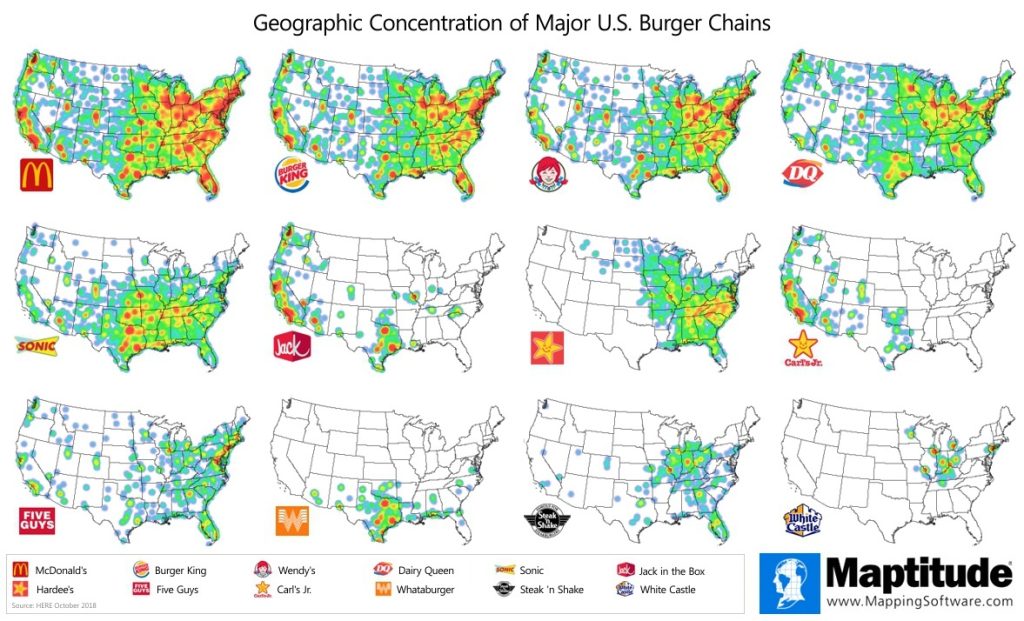
Fast food is an addictive substance that runs through America, but it affects different people in different ways. Most people have had fast food in their lives, and if you look around, you will notice that these fast food restaurants are all around. This is one of the reasons it is an epidemic in America: the number of fast-food establishments is scattered.
Who Do Fast Food Companies Target?
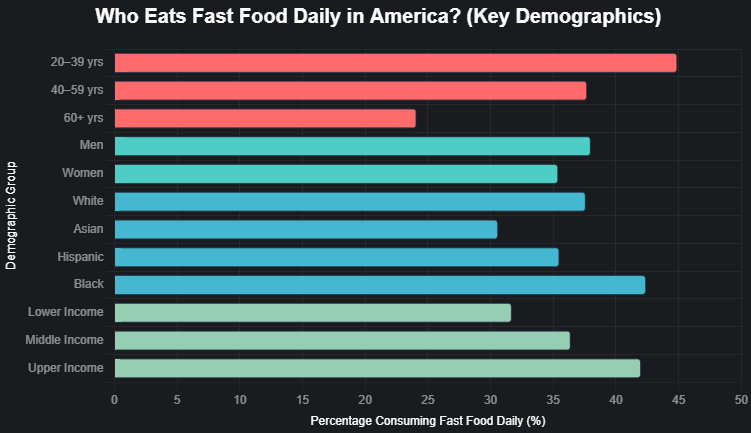
This leads to the fact that fast food companies also target certain people, whether that be race, income, or age. In the article “Fast Food Statistics November 2025,” it states that about 44.9% of people between the ages of 20 and 39 consume fast food on any given day. For people 40-59, the number drops to 37.7%, but it does not change the fact that these numbers are still alarming. The last age group this article covers is people 60 and older. For people 60 and older, the percentage who consume fast food on any given day is about 24.1%. So as people get older, the amount of fast food they consume decreases. This would lead to fewer fast-food restaurants getting built in these communities. But it is still alarming to see that, on average across all age groups, 35.57% of people consume fast food on any given day. Fast-food companies also consider the gender of the people who live in that area. “Fast food statistics” states that about 38% of men consume fast food daily, and about 35.4% of women consume fast food daily. The next factor considered is the race of the given area. For the statistics on white people, about 37.6% of white people eat fast food daily. For Asian people, roughly 30.6% eat fast food daily. For the Hispanic community in the USA, about 35.5% of Hispanics eat fast food daily. Lastly, the African American community consumes fast food on average at 42.4%. Fast food companies look at the average income in the area, too, when choosing a location. So they get statistics on who eats fast food by income class. For people in the “lower class,” about 31.7% of the lower class population eats fast food on a daily basis. People who are in the “middle class” consume fast food on any given day at about 36.4%. Finally, the “upper class” consumes the most fast food on any given day, at about 42% having fast food daily. This is the opposite of what was widely believed before, that the lower your income, the more fast food you would consume, but that is just not the case. From a statistical standpoint, the more money someone makes, the more fast food they will consume on a given day. The fast-food industry uses all these numbers to maximize profits at its restaurants, which means targeting specific ethnic groups, income classes, and age groups.
How Much Fast Food Americans Eat.
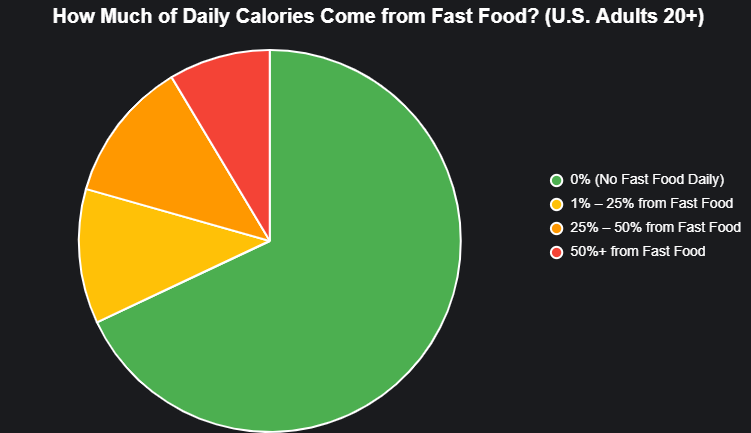
After learning about the statistics that fast-food companies use to maximize sales, which in turn lead to the pandemic the USA has, it is important to know how many calories fast food contributes to a given person’s daily caloric intake. For people over the age of 20, 68% say they don’t eat fast food daily. At the same time, 11.4% of people report that their daily caloric intake from fast food is between 1% and 25%. For 12% of people in America, the daily caloric intake from fast food is about 25% to 50%. Lastly, for the rest of the population, about 8.6% get 50% or more of their calories from ultra-processed foods like fast food.
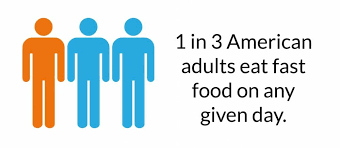
The numbers above only represent 2023. When did this big boom in fast food happen in the USA? It mostly started after COVID. Around 2019, the big boom happened for the fast-food industry. Their numbers skyrocketed, bumping up 15% from what they were. Even though the numbers were going up gradually, COVID made these numbers become exacerbated, and made fast food a hidden epidemic when everyone was worried about COVID. People did not want to sit at a table when COVID was extremely prevalent because of the risk of infection, so drive-thrus were the safest way to get food for some. This leads to an overconsumption of these ultra-processed fast foods. Now, 1 in 3 Americans eats fast food daily, when it should not be consumed in this quantity at all. This leads to a very unhealthy lifestyle that affects their daily lives.
The Health Effects of Fast Food.
Consuming fast food affects your gut. More specifically, the gut microbiome is essential to having a good, healthy life. The gut microbiome is your gut’s main way of digesting critical proteins that are a necessity for a human to function in everyday life. The gut microbiome is made up of a large assortment of bacteria, ranging from good bacteria to harmful bacteria. Some of the most common bacteria that are found in the gut are called “Bacteroidetes, Firmicutes, Actinobacteria, Proteobacteria, and Fusobacteria” (Eyewiki microbe biome Rana, V., Kim, E., Lifson, N., & Eyewiki. 2023, November 8). All of these bacteria are necessary to the gut microbiome, and eating too much fast food can affect the amount of these bacteria you have. If the gut microbiome is disturbed, it will lead to more stress, higher anxiety, a fluctuation in mood, and can lead to an unhealthy mental state. This relates to fast food for several reasons, one of which is that eating fast food daily can lead to a decline in these bacteria. It also promotes the growth of harmful bacteria, leading to a decrease in the body’s functions. With all of these dangerous bacteria growing because of the lack of nutrients, it will lead to inflammation of the stomach, face, and make you feel bloated. With this newfound inflammation, the body’s metabolism will diminish, leading to excessive weight gain. The gut microbiome also affects different parts of the body, like the immune system. Without healthy, helpful bacteria in the gut, the immune system will have to work overtime to balance the body and protect it from harmful bacteria that might not be caught by the gut microbiome.
Fast food lacks nutrition, as said earlier, but what is it truly missing? Fast food lacks all of the essentials like “fiber, calcium, potassium, magnesium, vitamin A, and vitamin C” (7 nutrients we are missing in fast food. Parker, D. 2018, September 14). The lack of these nutrients, combined with the addictiveness of fast food, can lead to binge eating. This will lead to high cholesterol and a higher chance of complications with an assortment of organs. With this lack of nutrition, your body is not receiving enough sustenance to function at peak performance. Leaving the body, the need for more and more help fuels the fast food addiction.
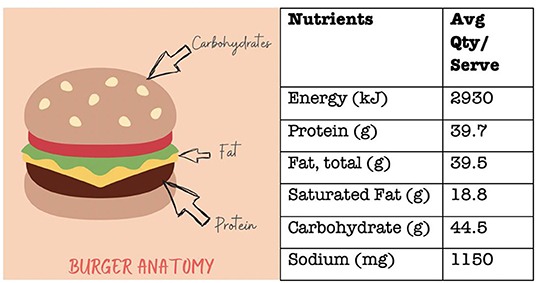
With all the negatives that come from ingesting fast food, some complications will most likely arise. One main problem that will most likely come up is heart disease or complications. “Most clinicians recognise that junk food consumption is associated with premature heart disease”. ( Junk food and heart disease: the missing tooth Bains, A. 2013). These diseases are heart attacks, strokes, and atherosclerosis (clogged arteries). This all happens because of the amount of salt, fat, and calories that are in fast food. The caloric intake when eating these foods is astonishingly high, and it takes time for the body to fully process these trans fats. When the body is processing these trans fats, they go into the bloodstream and make their way to the heart. Once this happens, the cholesterol can create blockages within the heart’s arteries, leading to a lack of blood flow and the heart having to work overtime to try to work at full efficiency. So when someone in the world eats fast food daily, this happens, and the heart can become a ticking time bomb. Another deadly disease that can arise from eating an excessive amount of fast food is a disease that most people know about and it is called type 2 diabetes. Type 2 Diabetes can be caused by an overconsumption of fast ultra-processed foods that are extremely high in fats, sugars, salts, and trans fats. The way fast food can contribute to type 2 diabetes is by the extreme spikes in blood sugar that occur when you eat ultra-processed food. If people keep eating fast food daily, as some Americans do, people will continuously be diagnosed as pre diabetic or have type 2 diabetes. The fast food epidemic and the type 2 diabetes epidemic have direct correlations. It is just that the diabetes epidemic is a lot more mainstream when it comes down to it. Eating ultra-processed fast food can also lead to liver damage. “A study published January 10 in the Clinical Gastroenterology and Hepatology medical journal found that eating fast food is associated with nonalcoholic fatty liver disease, which is a potentially life-threatening condition in which fat builds up in the liver” (Here’s how fast food can impact your liver Drillinger, M. (2023, January 13). This is a lesser-known effect of eating fast food, but that is not to say that it is one of the most important. The liver is an essential part of the human body that goes through enough as it is. Yet these foods put a lot of stress on the liver, leading to a less productive liver, liver scarring, liver damage, and in the worst “cirrhosis, which can then lead to liver cancer or failure”. ( Here’s how fast food can impact your liver, Drillinger, M. 2023, January 13). Cirrhosis is scarring on the liver that inhibits liver functions, and if the person does not stop what they are doing to harm their liver, they will go into liver failure or get liver cancer. Most don’t think of the impacts that fast food has on the liver, but fast food can significantly change someone’s life in a lot of different ways.
Mental Health and Fast Food.
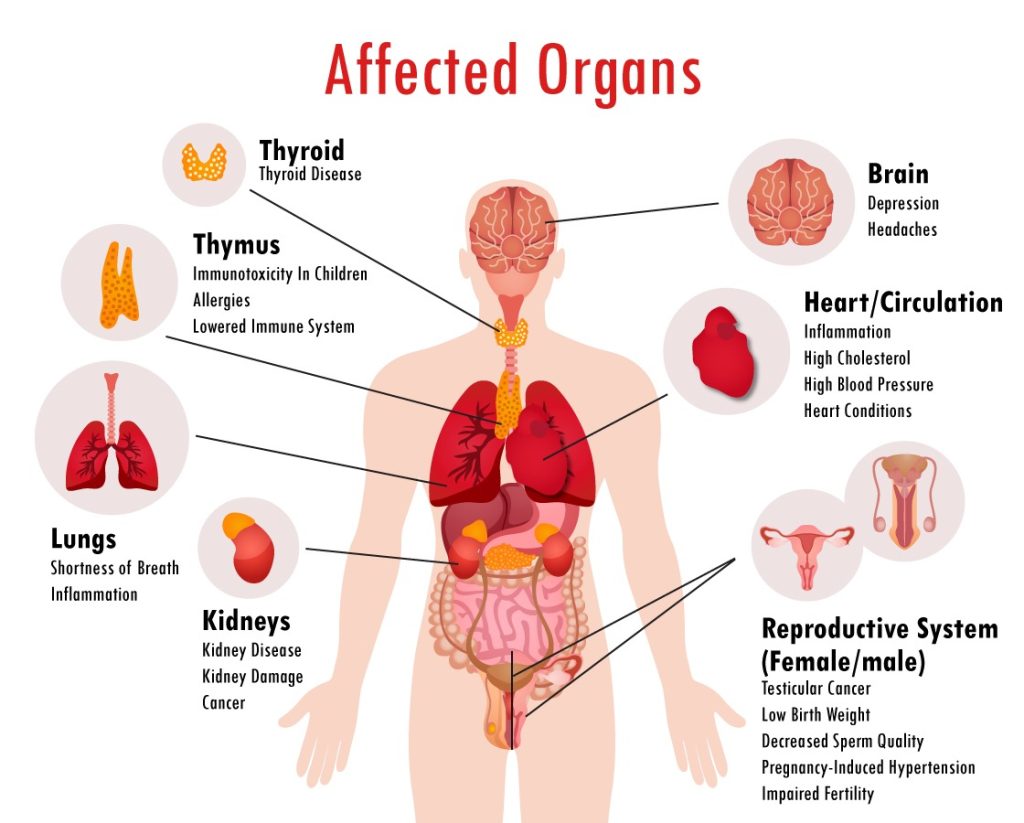
One way fast food can change someone’s life is on the mental side of the spectrum, not the physical side. Fast food also affects someone’s brain, how they choose food, and how they live their everyday lives. For example, the “Increased consumption of junk food has heightened the odds of depression and psychological stress being experienced in adult populations” (Association between junk food consumption and mental health problems in adults, Ejtahed, H.-S. 2024). Depression is not something to be joked around about; only recently has depression been taken seriously, and now that people look into what can cause depression, it has been astonishing to find out what can help lead to curing or suppressing the depressing feelings. Fast food affects mood just as much as the physical part of this. People have reported going through mood swings where their mood fluctuates rapidly. This can affect a person’s interactions with others and can inhibit their future. It is mainly caused by consuming too much salt, fat, trans fat, and other harmful ingredients found in fast food. It is also known that fast food has been proven to cause anxiety. This is because the body does not know what to do with the extreme amount of ultra-processed food. This can lead to emotional eating. Emotional eating, or more commonly known as stress eating, is when someone eats only because they want to feel better and not because they need nutrition. This is not a good habit, and it is especially bad if that person’s comfort food is fast food. This is because it will cause way more harm than good. It will leave the impression that this type of food and eating is okay, but in reality, it is highly detrimental to a person’s mental stability. This is when mood swings really start to appear and affect people’s social lives. This is when the reliance on fast food starts to happen, and then the addiction follows suit soon after.
Fast Food’s Impact on Children.
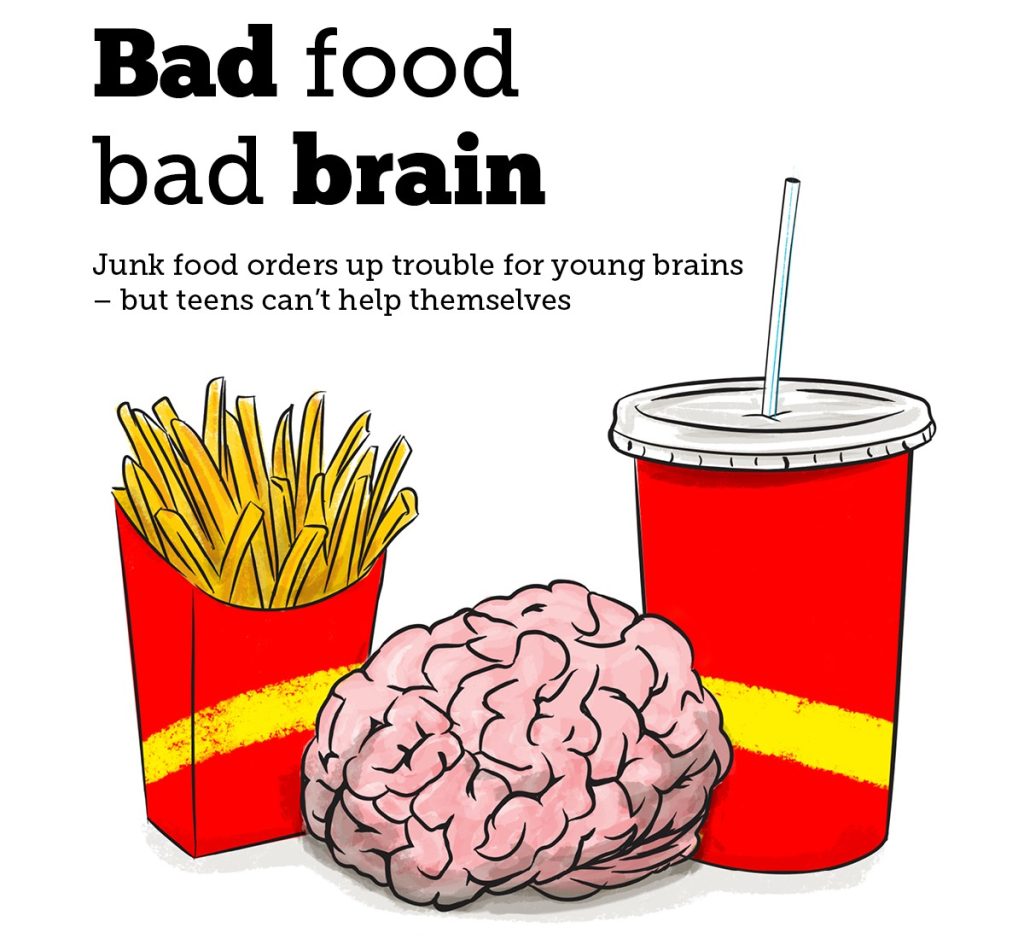
This blog has been all about how fast food affects adults, but how does fast food affect the kids who consume this type of food? Kids are a lot more susceptible to the negative effects of fast food. Becoming addicted, obese, depressed, and having poor academics. Fast food can affect kids’ academic careers because it lacks the nutrients a growing child needs. So that means the kids will not be able to function at full functionality. Eating too much fast food as a kid can also lead to low energy. This is super detrimental to a kid; kids need to run around and explore the world. If they don’t do this, their imaginations might suffer, and if a kid stays isolated because of the lack of energy, it will affect their social lives in the future. Depending on the type of fast food the kid eats, they could experience hyperactivity. Usually, extremely sugary fast foods are the root of this problem. Stuff like Coke, Sprite, slushies, milkshakes, water ice, and other sugar-filled foods. But it is not limited to these sweet treats; the fries, burgers, chicken nuggets, and other fried foods also affect this. The “Essential fatty acids are typically missing or lacking in fast foods. These include omega-3 and omega-6 polyunsaturated fatty acids, which cannot be produced within the body, but are essential for the manufacture of cell membranes” (How fast food affects children’s health, Thomas, L. 2018, August 23). As said in the quote, fast food lacks some extremely important fats that are necessary to the human body and especially for a kid.
Why Americans Keep Choosing Fast Food.
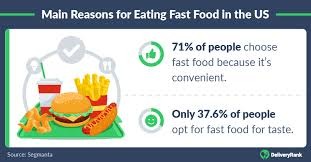
If fast food has this many drawbacks, why would people not try to find an alternative? There are a couple of reasons for this, and one of them is the price. Even though the price of fast food has gone up significantly in the past few years, it is still a cheaper alternative to going and getting groceries or almost any other means of getting food. The fast food companies make family deals so that someone can feed their family for only 20 dollars. This leaves some people no other choice but to buy fast food for themselves or their kids. For others, it is a matter of convenience. Some people can’t go and sit down for a meal because of a variety of reasons that most people have experienced. So they settle for fast food so they can get to what they want or need to do in their lives. In a way, this also represents America’s convenience culture. The American people have become accustomed to having everything they need in no more than one or two places. Also, the fact that people have places to go means being able to be in and out of a restaurant within 15 minutes is highly appealing to Americans. Or even being able to eat and drive to the following location, without having to worry about getting out of the car. It becomes even more convenient because people don’t even need to do the dishes or do much cleanup. Most fast food comes in a bag that people can just throw out without thinking twice. Given this level of convenience, why would people sit down at a restaurant to eat? The food might be better for you, but it is more expensive, takes much longer, and requires much more effort than just driving to a drive-through and ordering food that will be ready by the time you have to pay.
As mentioned earlier in this blog, fast-food companies target specific demographics. But they also use different tactics than just location to try to get people to eat the poison they call food. An example of this is when they use colors that stand out, so people will never miss a McDonald’s or a Taco Bell. McDonald’s uses bright colors like red and yellow so that everyone knows that there is a McDonald’s nearby. Also, using an iconic and memorable logo like the golden arch. Furthermore, some smells are associated with these restaurants. The McDonald’s fries are super pungent in smell and make people want to eat them or buy them. They also target little kids with the little plastic toys that are in the kids’ meals. Some parents will crumble under the pressure of their child asking for food when it is so affordable and convenient. So fast food companies create gender specific toys that can be enjoyed by little kids all around. They also do partnerships with movies or shows so that they can create a cheap toy that kids can play with. They also make sure there is a variety of toys so that it is not a definite that the kid will get the toy they want. This leads to kids wanting more and more just so they can get the toy that is most coveted by them. Fast food companies exploit kids’ lack of understanding of what they want and what they need.
Are there healthy fast food options?
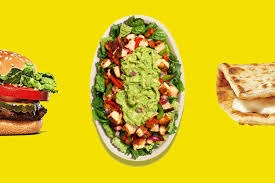
With all the bad that comes with consuming unhealthy fast foods, there are some healthy fast foods. There are not a lot of chain restaurants that sell healthy fast food, but there are some. The reason these fast food chains don’t get as much attention is because of the price, the number of them, and the locations they are put into. This argument is something to take into account, but it does not change the fact that most of the fast food industry sells unhealthy products.
Conclution
So what does fast food actually do to someone’s body over time, and how did fast food companies become so indoctrinated into American culture? The fast food industry took advantage of the fact that Americans want to move fast and don’t like to wait for anything. Using data to find out which ethnic group, income bracket, and age group will and does consume the most fast food, they can set up numerous locations around that given area. Also, using bright, vibrant colors on their iconic, memorable logos to try to get people to never forget what they are. The companies also use gimmicks like toys to get kids to ask their parents to get them that fast food of choice. But what does fast food do to the body over time? Overconsumption of fast food does nothing but harm the person. It basically affects every part of the body. The heart, liver, digestive system, gut microbiome, and the mind are all deeply affected by the consumption of ultra-processed foods like fast food. It can lead to illness, different diseases like diabetes, and worst comes to worst, organ failure or even death if the diet is not changed. People need to understand that the plague of fast food in America is not slowing down. It needs to be stopped or at least better understood so that it is less of a silent killer to the American people.
Sutcliffe, J. (2022, May 4). Why is junk food so addictive, and what does this mean if you have type 2 diabetes? Habitual. https://www.tryhabitual.com/journal/why-is-junk-food-so-addictive
Fast food | Nutrition, Health, & Meaning. (n.d.). Encyclopædia Britannica. Retrieved October 21, 2025, from https://www.britannica.com/topic/fast-food
MedlinePlus. (n.d.). Fast food and weight gain. U.S. National Library of Medicine. https://medlineplus.gov/ency/imagepages/19491.htm
The Barbecue Lab. (2023, July). Fast Food Statistics | July 2023. https://thebarbecuelab.com/fast-food/
Parker, D. (2018, September 14). 7 nutrients we are missing in fast food. Stellar Health & Wellness. https://www.tryhabitual.com/journal/why-is-junk-food-so-addictive
Bains, A. (2013). Junk food and heart disease: the missing tooth. Journal of the Royal Society of Medicine, 106(12), 472-473. https://doi.org/10.1177/0141076813512297
Drillinger, M. (2023, January 13). Here’s how fast food can impact your liver. Healthline. https://www.healthline.com/health-news/heres-how-fast-food-can-impact-your-liver#What-is-nonalcoholic-fatty-liver-disease
Ejtahed, H.-S., Mardi, P., Hejrani, B., Mahdavi, F. S., Ghoreshi, B., Gohari, K., … Qorbani, M. (2024). Association between junk food consumption and mental health problems in adults: A systematic review and meta-analysis. BMC Psychiatry, 24(1), 438. https://doi.org/10.1186/s12888-024-05889-8
Thomas, L. (2018, August 23). How fast food affects children’s health. News-Medical. https://www.news-medical.net/health/How-Fast-Food-Affects-Childrens-Health.aspx
Fleischhacker, S. E., Evenson, K. R., Rodriguez, D. A., & Ammerman, A. S. (2011). A systematic review of fast food access studies. Obesity Reviews, 12(5), e460-e471. https://doi.org/10.1111/j.1467-789X.2010.00715.x
Fuhrman, J. (2018). The hidden dangers of fast and processed food. American Journal of Lifestyle Medicine, 12(5), 375-381. https://doi.org/10.1177/1559827618766483
Shah, S. S., Noman, O., & Jaiswal, N. (2023, November 21). Unveiling the gut microbiome: How junk food impacts the gut. Cureus. https://pmc.ncbi.nlm.nih.gov/articles/PMC10734656/
Rana, V., Kim, E., Lifson, N., & EyeWiki. (2023, November 8). Gut microbiome. EyeWiki. https://eyewiki.org/Gut_Microbiome
Photo links:
Fast Food Photos, Download the Best Free Fast Food Stock Photos & HD Images, www.pexels.com/search/fast%20food/.
“Concentration of Top U.S. Burger Chain Restaurants – Maptitude Infographic.” Maptitude Map: Geographic Concentration of Top U.S. Burger Chains, www.caliper.com/featured-maps/maptitude-burger-chain-restaurants-concentration.html?srsltid=AfmBOooZkYHCgLTyNk-QhMgyU_eAWCqm1_6fXG4vvuPg4TKbAprEZJn1.
“Adolescents Prone to Poor Dietary Choices, Leading to Changes in the Brain.” BrainsCAN, brainscan.uwo.ca/news/2020/adolescent_dietary_choices_leading_to_changes_in_brain.html.
Authors Matthew P. Duda, et al. “The Impacts of Junk Food on Health.” Frontiers for Young Minds, kids.frontiersin.org/articles/10.3389/frym.2022.694523.
Kaufman, Jared. “The Forgotten Fast Food Restaurant That Offered the First Kids’ Meal.” Mashed, Mashed, 3 June 2022, www.mashed.com/883801/the-forgotten-fast-food-restaurant-that-offered-the-first-kids-meal/.
James, Debbie. “How Fast Food Affects Your Body.” City Sports Club, 7 Jan. 2019, blog.citysportsfitness.com/2019/01/07/how-fast-food-affects-your-body/.
“DeliveryRank.” 10 Best Meal Delivery Services 2024: Expert Ranked, www.deliveryrank.com/blog/fast-food-statistics.
Nunez, Kirsten. “14 Healthy Fast-Food Orders That Are Definitely Not Boring.” Shape, Shape, 8 Mar. 2024, www.shape.com/healthy-eating/diet-tips/healthy-fast-food.